December 19, 2025
The Role of Light and Shadow in Design and Brand Identity
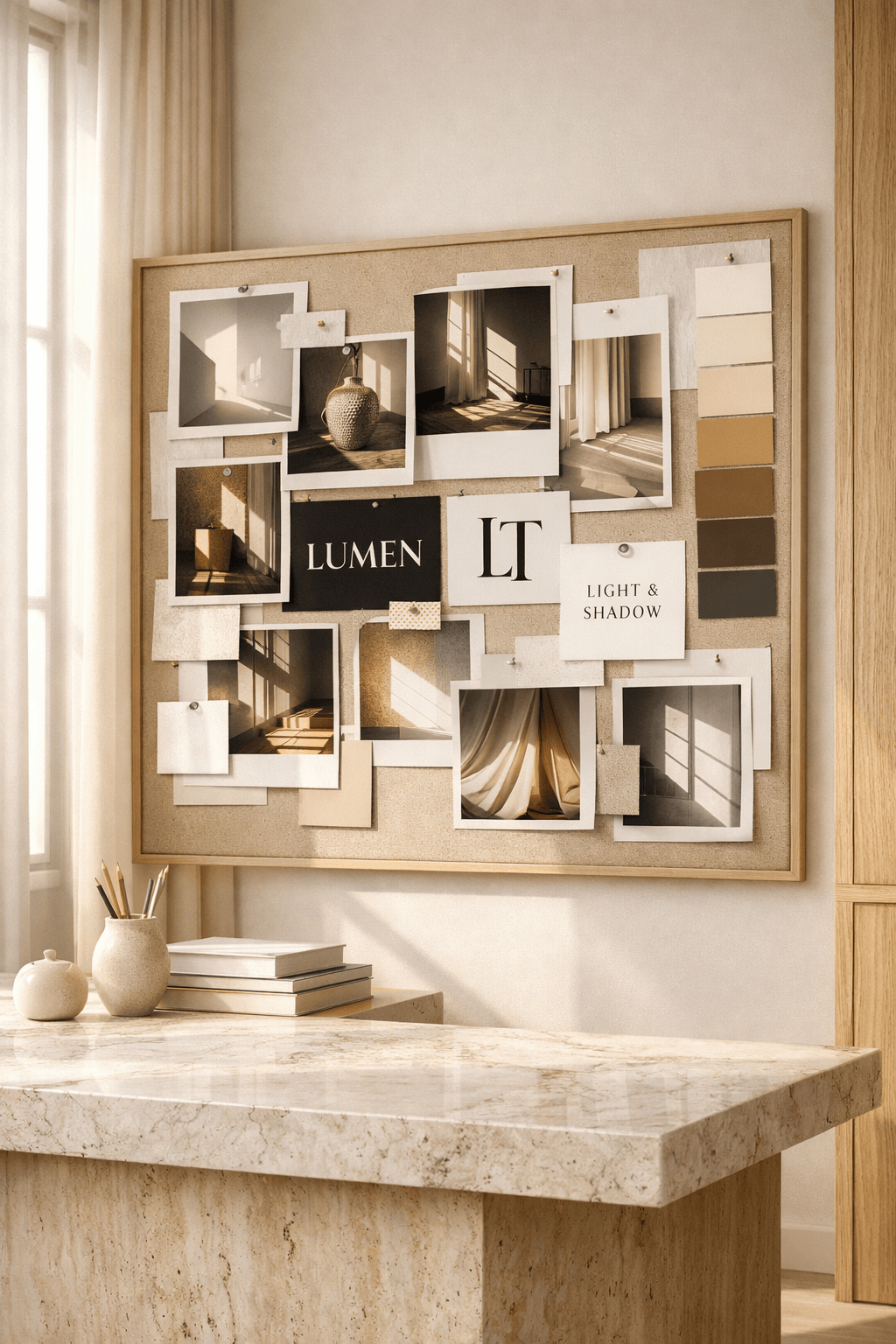
Walk into a beautifully designed building, and you may notice certain details immediately: Sunlight filtering through tall windows. Shadows stretching across textured stone floors. Striking paintings adorning walls. Architectural details like these often gradually make their way into our consciousness because of how light and shadow reveal their depth.
In brand identity, the same principle quietly shapes some of the most compelling web and graphic design experiences, whether in real world environments, such as conference displays or brochures, or in digital environments, such as websites or marketing emails.
For many designers light and shadow are technical considerations. At Curator, they are storytelling tools that create contrast, guide attention, and give visual compositions a sense of dimension.
For businesses thinking carefully about design and brand identity, understanding the role of light and shadow can lead to something subtle yet powerful: a brand presence that feels richer, more intentional, and more memorable.
Understanding Light and Shadow in Design
At its simplest, light allows us to see. But in design, light does so much more than illuminate. It reveals form, highlights certain elements, or pulls objects forward to create a layered effect. Shadow plays an equally important role. It introduces contrast and depth by pushing objects backward or providing a canvas for illuminated text or objects to pop off of.
In their own ways, both light and shadow help to establish visual hierarchy within a composition, preventing designs from feeling flat or indistinct, influencing how the eye moves through a visual environment. In practical terms, this may appear through:
- The way photography captures natural light
- Gradients that simulate illumination
- Contrast between light and dark surfaces
- Subtle shadows that lift elements off a background
- Dimensional textures that respond to light
When these elements are used thoughtfully, designs gain a sense of three-dimensional presence, even within a two-dimensional space.
Lessons from Architecture
Architecture offers some of the clearest examples of how light and shadow influence experience.
Consider a museum gallery designed to showcase sculptures. Rather than flooding the room with uniform lighting, architects often use directional light that creates gentle shadows along the surfaces of the artwork. These shadows reveal the curves and details that would otherwise remain invisible. Similarly, many modern buildings incorporate skylights, large windows, and layered materials specifically to create dynamic lighting conditions throughout the day.
A popular downtown bar featuring an alternative, yet polished brand identity might use dark paint and elaborate, yet muted lighting to create shadowy corners where patrons can delight in sumptuous cocktails.
In all of these examples, the goal is to generate visual drama instead of simply creating brightness or darkness. These same principles apply to digital spaces; when light and shadow are used carefully, they guide attention, help important elements stand out, and evoke an intentional emotional experience.
Light and Shadow in Photography
Photography provides another clear example of this principle in action. Professional photographers rarely rely on flat lighting. Instead, they carefully position light sources or select particular times of day to create contrast and depth.
Portrait photography often uses directional lighting to sculpt the subject’s features. Similarly, landscape photography often relies on early morning or late afternoon light, which are known as “golden hours”, when shadows stretch across the landscape and reveal its contours.
These choices transform ordinary scenes into compelling visual narratives. For businesses, photography that thoughtfully uses light and shadow often feels more sophisticated and editorial, reinforcing a sense of professionalism and care.
It is critical to ensure that the balance of light and shadow in photography used for marketing materials must align with or complement the balance of light and shadow in a company’s brand identity.
How Light and Shadow Shape Brand Identity
While these concepts originate in art and photography, they also influence how brands communicate visually. Many organizations instinctively understand the emotional associations created by light and shadow.
Bright, open lighting can suggest transparency, optimism, and accessibility. Deeper shadows and dramatic contrast may communicate sophistication, precision, or luxury. Dark colours that are applied without light, may create an edgy or alternative appearance. These visual cues subtly shape how audiences interpret a brand.
For example:
- A high-end restaurant may use warm, low lighting and dramatic shadows in its photography to create an atmosphere of intimacy and refinement.
- A medical clinic may favor bright, evenly lit imagery that communicates clarity and trust.
- A technology manufacturer might use sharp highlights and metallic shadows to emphasize precision and engineering quality.
In each case, the use of light and shadow reinforces the brand’s identity.
Creating Visual Hierarchy Through Contrast
One of the most practical uses of light and shadow in design is establishing visual hierarchy. Visual hierarchy refers to how designers guide the viewer’s attention toward the most important elements first.
Light naturally attracts the eye, drawing your eye towards light text or objects. Darker areas recede into the background, helping light text objects pop forward. By strategically combining light and shadow, designers can create a natural flow across a page or composition.
For instance, a website’s top banner section might use a slightly darker background image so that bright typography stands out clearly. A call-to-action button may appear brighter or more illuminated than surrounding elements.
This layering allows visitors to quickly understand where to focus their attention. Without an intentional visual hierarchy, pages can feel flat and more difficult to navigate with ease.
Light, Shadow, and Emotional Atmosphere
Beyond structure and hierarchy, lighting choices also shape emotional tone. Film directors understand this deeply: a brightly lit scene often feels hopeful or open, while darker lighting can create tension or introspection.
In part, this occurs because light and shadow play a significant role in how we perceive colour. Colour rarely appears the same under different lighting conditions; the intensity, direction, and temperature of light can subtly shift how a colour is experienced. For example, warm natural light may make colours appear richer and softer, while cooler or harsher lighting can make the same colours feel sharper or more subdued.
Shadows also influence colour perception by creating contrast and depth. When part of a surface falls into shadow, the surrounding illuminated areas may appear brighter or more saturated by comparison. This interplay between light and shadow helps reveal form and dimension, allowing colours to feel more dynamic rather than flat. In design, understanding this relationship allows colours to be used more intentionally, ensuring that palettes remain balanced and visually harmonious across different environments.
The way we perceive colour can strongly influence the emotional atmosphere of a space or design. Colours that appear brighter and more luminous under generous light often feel open, optimistic, and energizing, while colours softened by shadow can create a calmer, more reflective mood. Even subtle shifts in tone caused by lighting conditions or surrounding colours can change how a palette is experienced emotionally.
For example, a deep blue illuminated by soft, warm light may feel rich and inviting, while the same blue under cooler lighting might appear more restrained and formal. Designers often consider these relationships carefully, using colour, light, and shadow together to shape the overall emotional tone of a brand, environment, or visual composition.
Brands can use similar techniques in their visual communication. Consider the difference between two types of imagery:
- A vineyard photographed at sunrise, with long shadows stretching across the rows of vines, communicates tranquility and heritage.
- The same vineyard photographed under midday lighting may appear far less atmospheric.
Lighting influences how we feel about what we see. The way colour is perceived and the emotional atmosphere it creates can have a meaningful influence on brand identity. Colours do more than provide visual distinction; they help communicate the personality, values, and tone of a brand. When lighting, contrast, and surrounding elements subtly shift how colours appear, they can also shape the emotional experience audiences associate with the brand.
For example, a palette that appears bright and luminous, may communicate openness, energy, or optimism, while deeper tones shaped by shadow may suggest sophistication, stability, or quiet confidence. Thoughtful brands consider how their colours will be experienced across different environments such as websites, printed materials, physical spaces, and photography, so that the emotional atmosphere remains consistent and reinforces the identity they want audiences to remember.
For companies developing a strong visual identity, these emotional cues become part of the brand story.
Applications Across Different Industries
Light and shadow influence visual storytelling across many fields, often in ways that clients recognize intuitively.
Hospitality
Hotels frequently use lighting to communicate atmosphere before guests even arrive. A mountain lodge might feature warm, low lighting that highlights wood and stone textures. A coastal resort may emphasize bright natural light reflecting off water and sand.
These visual cues help potential guests imagine the experience of staying there.
Healthcare
Healthcare organizations often rely on bright, evenly distributed lighting to communicate clarity, safety, and transparency. Photographs of facilities may emphasize natural light streaming through windows, reinforcing a sense of cleanliness and transparency.
This approach helps patients feel reassured before they ever visit the facility.
Manufacturing and Engineering
Industrial companies sometimes use dramatic lighting to highlight the precision of their work. Photographs of machinery or structural components often rely on directional light that emphasizes metallic surfaces and technical details.
These shadows reveal craftsmanship and complexity, transforming industrial processes into visually compelling imagery.
Food and Beverage
Restaurants and food producers frequently rely on lighting to make ingredients appear fresh and inviting. Soft shadows around plated dishes create dimension and texture, allowing viewers to almost imagine the flavors.
Flat lighting, by contrast, can make food appear less appealing, even if the ingredients and presentation are exceptional.
Balancing Light and Shadow in Digital Design
In digital environments, designers must balance atmosphere with clarity. Websites and interfaces need to remain easy to read and navigate, which means lighting effects should generally be subtle rather than harsh.
Common techniques include:
- Gentle gradients that simulate illumination
- Soft drop shadows that lift elements from backgrounds
- Contrast between light sections and darker sections of a page
- Photography that uses natural light to create visual depth
These details help digital environments feel layered and dimensional without overwhelming the content itself.
Avoiding the Trap of Flat Design
While simplicity has its advantages, overly flat designs can sometimes feel sterile or visually indistinct. Introducing subtle lighting effects through shadows, gradients, and texture can restore a sense of depth without sacrificing clarity.
This approach allows modern design to remain clean while still feeling rich and immersive.
Even though light and shadow rarely appears at the center of design conversations, these effects influence nearly every visual experience we encounter. They shape how buildings feel, how photographs tell stories, and how brands communicate their identity.
For businesses investing in thoughtful design, understanding this principle opens new possibilities. Light and shadow can guide attention, create atmosphere, and add dimension to visual environments.
Often, the most compelling designs are not those that rely on dramatic gestures, but those that quietly balance contrast and illumination. When used thoughtfully, light and shadow transform visual communication from something merely functional into something memorable—an experience that feels both intentional and alive.
Presenting Our Recent Work :
Return to the Archive Blog X



BORN & RAISED IN Calgary, Alberta AND IS
our ceo & lead designer WAS
proudly
Canadian
proudly Canadian.
Lauren Killam draws creative inspiration from both her academic background and global experiences. With a foundation in applied mathematics and anthropology, she brings a thoughtful blend of analytical precision and cultural curiosity to every project. Having lived in the Middle East and California before returning to Calgary, Lauren infuses her work with a rich mix of perspectives that are grounded in strategy, guided by empathy, and always ready to challenge the status quo.
Based in Calgary, Alberta and Proudly Canadian • Web Design • Graphic Design • Marketing Strategy • Visual Branding • Copy Writing • Product Development • Email Design • Social Media Design • SEO • Image Curation • Website Auditing • Based in Calgary, Alberta and Proudly Canadian • Web Design • Graphic Design • Marketing Strategy • Visual Branding • Copy Writing • Product Development • Email Design • Social Media Design • SEO • Image Curation • Website Auditing • Based in Calgary, Alberta and Proudly Canadian • Web Design • Graphic Design • Marketing Strategy • Visual Branding • Copy Writing • Product Development • Email Design • Social Media Design • SEO • Image Curation • Website Auditing • Based in Calgary, Alberta and Proudly Canadian • Web Design • Graphic Design • Marketing Strategy • Visual Branding • Copy Writing • Product Development • Email Design • Social Media Design • SEO • Image Curation • Website Auditing • Based in Calgary, Alberta and Proudly Canadian • Web Design • Graphic Design • Marketing Strategy • Visual Branding • Copy Writing • Product Development • Email Design • Social Media Design • SEO • Image Curation • Website Auditing •
Based in Calgary, Alberta and Proudly Canadian • Web Design • Graphic Design • Marketing Strategy • Visual Branding • Copy Writing • Product Development • Email Design • Social Media Design • SEO • Image Curation • Website Auditing • Based in Calgary, Alberta and Proudly Canadian • Web Design • Graphic Design • Marketing Strategy • Visual Branding • Copy Writing • Product Development • Email Design • Social Media Design • SEO • Image Curation • Website Auditing • Based in Calgary, Alberta and Proudly Canadian • Web Design • Graphic Design • Marketing Strategy • Visual Branding • Copy Writing • Product Development • Email Design • Social Media Design • SEO • Image Curation • Website Auditing •
Based in Calgary, Alberta and Proudly Canadian • Web Design • Graphic Design • Marketing Strategy • Visual Branding • Copy Writing • Product Development • Email Design • Social Media Design • SEO • Image Curation • Website Auditing • Based in Calgary, Alberta and Proudly Canadian • Web Design • Graphic Design • Marketing Strategy • Visual Branding • Copy Writing • Product Development • Email Design • Social Media Design • SEO • Image Curation • Website Auditing • Based in Calgary, Alberta and Proudly Canadian • Web Design • Graphic Design • Marketing Strategy • Visual Branding • Copy Writing • Product Development • Email Design • Social Media Design • SEO • Image Curation • Website Auditing • Based in Calgary, Alberta and Proudly Canadian • Web Design • Graphic Design • Marketing Strategy • Visual Branding • Copy Writing • Product Development • Email Design • Social Media Design • SEO • Image Curation • Website Auditing • Based in Calgary, Alberta and Proudly Canadian • Web Design • Graphic Design • Marketing Strategy • Visual Branding • Copy Writing • Product Development • Email Design • Social Media Design • SEO • Image Curation • Website Auditing •
Based in Calgary, Alberta and Proudly Canadian • Web Design • Graphic Design • Marketing Strategy • Visual Branding • Copy Writing • Product Development • Email Design • Social Media Design • SEO • Image Curation • Website Auditing • Based in Calgary, Alberta and Proudly Canadian • Web Design • Graphic Design • Marketing Strategy • Visual Branding • Copy Writing • Product Development • Email Design • Social Media Design • SEO • Image Curation • Website Auditing • Based in Calgary, Alberta and Proudly Canadian • Web Design • Graphic Design • Marketing Strategy • Visual Branding • Copy Writing • Product Development • Email Design • Social Media Design • SEO • Image Curation • Website Auditing •


Explore Our services
BrAND
IDENTITY
Refined branding that captures the heart of your business with clarity and elegance, leaving a lasting impression with every detail.
pause

Explore Our services
Graphic Design
Purposeful design that seamlessly blends style and function, crafting interactive experiences your audience will come to trust and depend on.
pause

Explore Our services
copy- writing
Carefully crafted copy that speaks with clarity and purpose, capturing your brand voice and compelling your audience to take action.
pause

Explore Our services
art direction
Curated art direction guides visual storytelling, upholding brand compliance and business objectives across multi-disciplinary teams.
pause

Explore Our services
Media curation
Thoughtfully curated media that aligns with your brand’s identity, bringing your message to life with authenticity and visual impact.
pause

Explore Our services
marketing strategy
Integrated, thoughtful strategy that bridges design and direction, shaping a clear path to attract and convert ideal clients with purpose and precision.
pause


Explore Our services
Search & AI
Optimization
Strategic search engine and AI optimization that amplifies your online presence, boosting visibility, driving traffic, and enhancing user experience.
pause

explore The Archive
explore
The Archive
Think of our blog as your insider pass to our private catalogue. You'll find expert insights and inspired guidance on everything from web design and copywriting to marketing strategy and creative inspiration. It’s all beautifully curated to help your business grow with style.

platform comparison

hot off the press

essential article
these are a few of
Our Things
Our
Things
favourite
QUICK DISCLOSURE
Many of the sections listed below contain affiliate links for products and services that our CEO has used and loved for years. This simply means that we may receive a commission if you purchase something from this page. It won't cost you more (in fact, a lot of these programs actually include special offers that save you money) and it really helps us out. Plus, ya know, we were going to share it with you anyway!

website builder
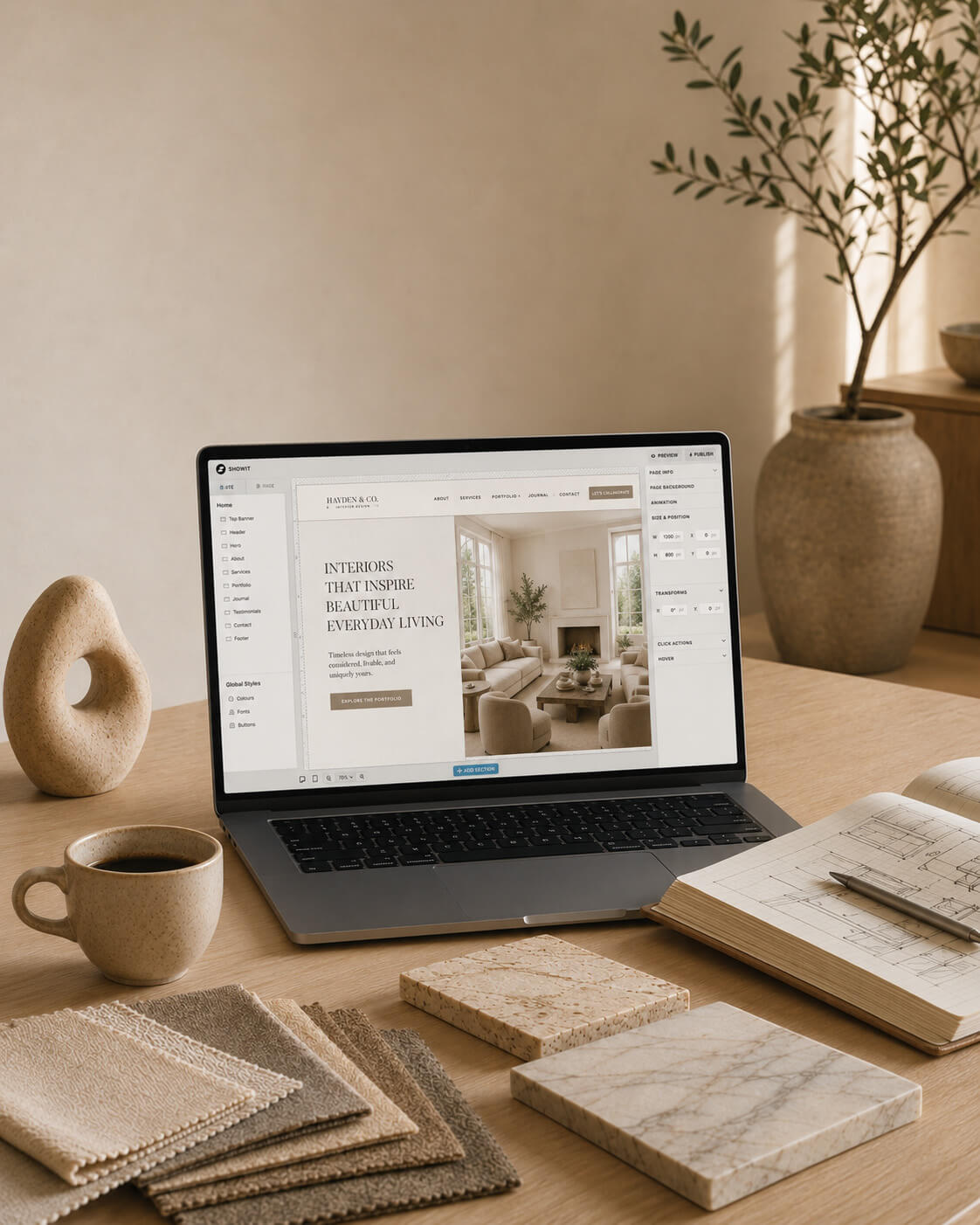
showit
the drag and drop
platform of dreams.
Showit is the RH of web design platforms. So, if you want a truly exquisite website without the six figure budget and months spent writing endless custom code, look no further.
SUBSCRIPTIONS START AT $22 USD/MONTH, BILLED YEARLY. You get A free month and so does Curator.

photography
sweet ginger
capture the Moments Your Heart will treasure.
It is our great pleasure to introduce you to Virginia. We are so deeply enamoured with her work, you can safely assume that any recent photograph of our CEO or family is a Sweet Ginger creation.
Investments vary by session type. you get a 15-minute mini session for $275 and WE get A $50 credit!

premium custom printing
Jukebox
the printer of dreams for Marketing Collateral
When you need materials to represent your brand in the analog world, trust Jukebox. Their proof system shows you exactly what your products will look like. #goodsurprisesonly
When you spend more than $50 on your order you get $25 off and we get a $25 credit.

Lead Magnets + More
BDOW!
the ultimate integrated conversion system
BDOW! gives you the best combination of features, flexibility, and pricing in the market. No coding required. Just everything you need to build high-converting experiences, connect your systems, and then launch, optimize, and grow.
send us an email to request discount info.

customer relationships
honeybook
Organize your business,
your way, all in one place.
HoneyBook is the software solution that has created the greatest freedom and ease in our business. We can focus on you because of its full suite of business management and client interaction tools.
SUBSCRIPTIONS START AT $16 USD/MONTH, BILLED YEARLY. You get 30% off your first year and we get up to $100.

Project management
Clickup
one (productivity) app
to replace them all.
What HoneyBook is to customer relationship management software, ClickUp is to project management software. We use ClickUp for lead magnet funnel strategies, and so much more.
Free plan available. I get $1.50 for free accounts and up to $20 per seat for paid accounts.

Digital workspace provider
Everything, everywhere, oraganized all at once.
Curator relies on Google Workspace to keep our business balanced with a productive and functional home life. Calendars, email, business and client files; this is how we manage our daily flow.
ask your project's lead designer for a unique promo code to get 10% off your first year.

information security
Keeper
Essential security for your everything.
We've been using Keeper to protect family passwords and streamline our home admin for YEARS. So, when I began my web design career, using Keeper for my business was the easiest choice ever.
Personal Plans begin at $2.92 USD/month. you get 30% Off and I get $30.

Financial management
quickbooks
the world's leader in business accounting
I can faithfully say that this is the most powerful accounting software I've used. While it's true that I appreciate QB's extensive features, its the numerous native integrations I treasure most.
subscriptions start at $24 CAD/month. You get 50% off your first 6 months and i get $100 CAD.

Business banking
Venn
stress-free and low-fee small business banking
We believe this is the most user-friendly and cost-effective business banking account available in Canada today. Sign up online, get instant cards, earn cashback, and don't get shocked by fees.
get an enrolment bonus of $100 when you spend more than $10,000 with your new venn card.

legal protection
WebsitePolicies
Website-Policies
simple cookie consent and privacy compliance
Cookie
& privacy compliance
The role of user activity data in a company's marketing activities is governed by complex legal frameworks. Compliance is essential, and websitepolicies makes it easy to stay on top of requirements.
The role of user activity data in a company's marketing activities is governed by complex legal frameworks. Compliance is essential, and Website-policies makes it easy to stay on track.
WebsitePolicies.com has the best pricing available. Choose the subscription that's right for you.

legal protection
contract shop
like your bff is a lawyer, but better.
like your bff is
a lawyer, but better.
It's no understatement to say that legal protection is an absolute necessity for every person or entity with an online presence. Website T&Cs, client contracts; you name it, you need it.
contract templates vary by type. You get peace of mind (priceless) and i get 20% on each sale.
The
BUSINESS


LOOKING for our INSTAGRAM?
Sorry, you're not going to find it.
Disappointed? Send us a quick note to strike up a conversation or request an in-person chat. We can't wait to meet you!

We respectfully acknowledge that our work takes place on the traditional and ancestral lands of the Treaty 7 region in Southern Alberta. This includes the Blackfoot Confederacy, comprising the Siksika, Piikani, and Kainai Nations, as well as the Tsuut’ina Nation and the Stoney Nakoda Nations of Chiniki, Bearspaw, and Goodstoney. We also recognize that Calgary is home to the Otipemisiwak Métis Government of the Métis Nation within Alberta, Region 3.
We honour the enduring relationships that Indigenous Peoples have with this land,
and we recognize that this territory has been a place of gathering, livelihood,
and cultural connection for over 10,000 years.
We acknowledge the deep and ongoing impacts of colonization, including displacement,
cultural erasure, systemic injustices, and intergenerational trauma that continue to affect
First Nations, Inuit, and Métis communities today. We recognize that
these harms are not only historical, but present and ongoing.
As a business, we are committed to listening, learning, and taking meaningful steps toward reconciliation. We strive to approach our work with respect, humility, and a responsibility to contribute, however we can, to a more equitable and inclusive future.
We honour the enduring relationships that Indigenous Peoples have with this land,
and we recognize that this territory has been a place of gathering, livelihood,
and cultural connection for over 10,000 years.
We acknowledge the deep and ongoing impacts of colonization, including displacement, cultural erasure, systemic injustices, and intergenerational trauma that continue to affect
First Nations, Inuit, and Métis communities today. We recognize that these harms are not only historical, but present and ongoing.
As a business, we are committed to listening, learning, and taking meaningful steps toward reconciliation. We strive to approach our work with respect, humility, and a responsibility to contribute, however we can, to a more equitable and inclusive future.
Home
Creative Services
Web Design
Brand Identity
Graphic Design
Copywriting
Art Direction
Media Curation
Strategy Services
Brand Strategy
Digital Strategy
About
The Archive Blog
Client Exhibitions
Join Curator
Questions & Answers
Contact Us

Showit vs. WordPress and 10 Reasons they Work Best Together

How to Create a Stand-Out Name for Your New Business
