October 3, 2025
Your Brand Identity Must Have These Critical Elements
Every organization develops a reputation over time. Sometimes it happens intentionally, through careful decisions about messaging, design, and client experience. Other times it happens gradually and somewhat unintentionally, shaped by a series of disconnected choices.
A website is created one year. Marketing materials are designed the next. A presentation template is assembled quickly for a conference. Social media graphics follow later, often by a different person or team each time.
Individually, each of these pieces may function well enough. Yet when viewed together, they can begin to reveal something important: the organization’s identity is being communicated in many different ways at once. This is where the concept of brand identity becomes essential.
While a brand identity must certainly clear guidelines about the visual components of a brand, it includes information about so much more than how a company looks. A brand identity is the framework that ensures every visible and verbal expression of the business works together coherently. It brings alignment to design, messaging, tone, and experience so that audiences encounter a consistent narrative wherever they interact with the organization.
Without this structure, even strong individual elements such as an attractive logo, a well-written website, or a thoughtful marketing campaign, can feel disconnected. With it, those same elements begin to reinforce one another, gradually building recognition and trust.
For businesses that want to present themselves with clarity and confidence, a strong brand identity is built from several essential components. Each element plays a distinct role, but together they form the foundation of a brand that audiences can understand, remember, and rely upon.
A Clear Brand Purpose
Every meaningful brand identity begins with a clear sense of purpose and purpose in turn answers a fundamental question: Why does this organization exist?
While this may seem like the beginning of a marketing exercise that you might see outlined in a textbook, this one question brings attention to the underlying reason the company was founded and the value it aims to bring to its clients or community.
Consider a medical clinic that specializes in preventive care. Its purpose may center on helping patients maintain long-term health rather than only treating illness. Or imagine a vineyard whose purpose is to preserve traditional winemaking techniques while stewarding the land responsibly.
When purpose is clearly defined, it guides nearly every decision a company makes from messaging and service offerings to design and client experience. Without this foundation, brand identity often looks and feels superficial.
Brand Values, Vision, and Mission
Once a brand’s purpose has been clearly articulated, the next step is defining the principles that guide how that purpose is pursued. This is where brand values, vision, and mission statements become essential. While these elements are sometimes grouped together, each serves a distinct role within a brand’s strategic foundation.
Brand values describe the principles that shape how an organization behaves and makes decisions. They often reflect the standards a company holds itself to, whether that involves craftsmanship, transparency, innovation, stewardship, or service. Values influence both internal culture and external relationships, guiding how teams interact with clients, partners, and one another.
A vision statement looks toward the future. It describes the broader impact the organization hopes to achieve over time. Vision statements are aspirational by nature. They help teams understand the long-term direction of the company and provide a sense of shared ambition.
A mission statement, by contrast, focuses on the present. It clarifies what the organization does, who it serves, and how it delivers value today.
Together, these elements form an important strategic framework. Purpose explains why the organization exists. Values define how it operates. Mission describes what it does now, while vision describes where it is going.
When these ideas are clearly articulated, they influence far more than internal documents. They shape messaging, guide decision-making, and often inform the tone and direction of a brand’s visual identity.
For example, a company whose values emphasize environmental stewardship may reflect this commitment not only in its operations but also in the materials, imagery, and language used throughout its communications. Over time, these choices reinforce a consistent narrative that audiences can recognize and trust.
Brand Culture
Brand identity is often discussed in terms of visuals and messaging, but beneath those visible elements lies something equally important. An important component of a robust brand identity is brand culture, which refers to the shared attitudes, behaviours, and expectations that shape how an organization operates internally and how it presents itself externally.
Inside a company, culture influences how teams collaborate, how decisions are made, and how employees think about their responsibilities. Externally, that same culture shapes how clients experience the organization through communication style, service quality, and overall professionalism.
The relationship between internal culture and external brand perception is closely connected. When an organization’s internal values are genuinely reflected in its operations, the external brand tends to feel authentic and consistent.
For instance, a healthcare clinic that emphasizes compassion as a core value will ideally reflect that principle not only in its marketing language but also in how staff greet patients, how appointments are scheduled, and how follow-up care is handled.
Similarly, a manufacturing company that values precision and technical excellence may express those ideals both through its engineering standards and through its visual identity—clear typography, structured layouts, and detailed product documentation.
When internal and external culture align, the brand becomes more than a visual system. It becomes an extension of how the organization truly operates. This alignment is often what allows brands to build lasting trust over time.
A Distinct Position in the Market
Closely related to purpose is positioning. Positioning clarifies how your company differs from others offering similar services. It defines the unique space your organization occupies in the minds of your clients.
For example, two law firms may both handle estate planning. One firm may focus primarily on high-net-worth families and complex trust structures. Another may specialize in helping young families create their first wills and guardianship plans.
Both services are valuable, but their positioning and therefore their brand identity will naturally differ. When positioning is clearly articulated, brand messaging becomes more precise and design choices feel more intentional.
A Thoughtfully Chosen Brand Name
A brand name is often the first element people encounter when they discover a business. Before someone experiences your website, your services, or your client process, they typically encounter your name. For this reason, the name of a brand carries significant weight. It acts as both an introduction and a signal, hinting at what the company does, what it values, and how it positions itself within its industry.
Choosing a strong name is rarely a purely creative exercise. The most effective brand names emerge from a thoughtful process that considers brand strategy, audience perception, and long-term business goals. A good name should align naturally with the broader identity of the company, reinforcing the purpose, values, and positioning that guide the brand.
Several qualities often distinguish effective brand names. They tend to be clear and intuitive, allowing people to understand the general nature of the business without confusion. They are distinctive enough to be memorable, helping the company stand out in a crowded marketplace. Strong names are also flexible, leaving room for the organization to grow, expand services, or evolve its offerings over time.
Another important consideration is how the name works within the broader design and communication system of the brand. A name should feel comfortable within logos, website headings, marketing materials, and everyday conversation. In many cases, the name also influences the tone of the brand’s visual identity, messaging, and storytelling.
The process of naming often benefits from a balance between strategic thinking and intuition. Research and brand strategy provide important structure, helping businesses clarify their mission, ideal clients, and positioning. At the same time, many successful names emerge through collaborative exploration and creative insight once those strategic foundations are in place.
Ultimately, a brand name is not simply a label. It becomes the foundation upon which recognition, reputation, and trust are built. When chosen thoughtfully, it can serve as a powerful anchor for the entire brand identity system.
A Clear and Memorable Brand Tagline
While a brand name introduces a company, a brand tagline helps clarify what the company stands for and why its work matters. A well-crafted tagline acts as a short, memorable expression of a brand’s value, often distilling a complex offering into a few carefully chosen words.
Many organizations struggle to explain what they do in a way that is both concise and meaningful. A tagline provides an opportunity to bridge that gap. When developed thoughtfully, it reinforces the brand’s positioning and gives audiences a clearer sense of the role the company plays in their lives or businesses.
Effective taglines typically share several qualities. They are clear, avoiding language that is overly vague or abstract. They are memorable, using rhythm, contrast, or parallel phrasing to help the words stay with the reader. Most importantly, they are strategic, reflecting the company’s broader brand identity and the specific problems it helps solve.
In many cases, the strongest taglines focus less on describing services and more on highlighting outcomes or values. Rather than listing what a business offers, a good tagline often emphasizes the benefit that clients ultimately receive. This subtle shift helps audiences quickly understand why the company’s work is relevant to them.
A tagline also plays an important role within the visual and structural elements of a brand. It often appears alongside the logo, at the top of a website’s home page, within marketing materials, and across presentations or advertising campaigns. Because of this visibility, the language must feel natural within a variety of contexts, reinforcing the brand message without becoming repetitive.
It is also worth recognizing that taglines often evolve as companies grow. Early in a business’s life, a tagline may focus on explaining the core service. As the brand matures and recognition increases, the language may shift toward reinforcing reputation, philosophy, or a broader vision.
Ultimately, a strong tagline serves as a small but powerful piece of brand communication. It helps audiences quickly understand what the organization stands for, while reinforcing the clarity and confidence of the broader brand identity.
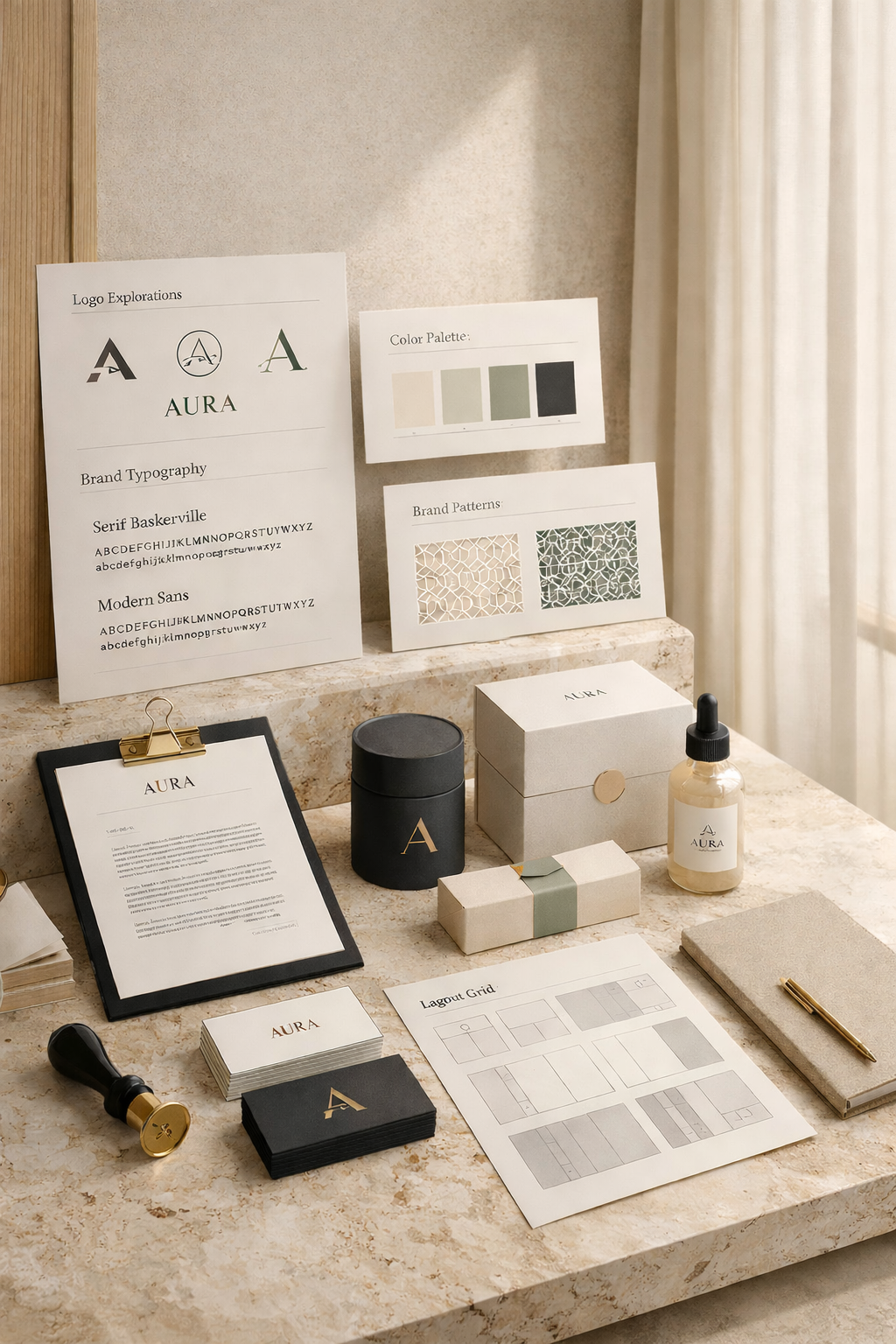
A Thoughtful Visual Identity
Visual identity is often the most recognizable component of a brand, but it is most effective when it grows out of the strategy beneath it. A cohesive visual identity typically includes:
- A primary logo and supporting logo variations
- A carefully selected colour palette
- A typeface system that reflects the brand’s tone
- Imagery and photography style
- Supporting graphic elements or textures
These components work together to create a visual language. Consider how a boutique hotel might use warm colours, natural textures, and atmospheric photography to convey a sense of quiet luxury. By contrast, a medical technology company might rely on cooler tones, precise typography, and clean imagery that suggests innovation and clarity.
Visual identity should reinforce the brand’s purpose and positioning rather than exist independently from them.
Cohesive Media
Media often carries emotional weight within a brand identity because photography, videography, and graphics all communicate atmosphere, scale, and human connection in ways text alone cannot.
However, many businesses unintentionally weaken their brand identity by using inconsistent imagery. One page may feature bright stock photography, while another uses darker editorial-style images. A cohesive media approach ensures that all visuals support the same narrative.
For example:
- A vineyard may consistently photograph its landscape across different seasons.
- A luxury home builder might document real projects and materials in use.
- A spa may highlight its facility and welcoming patient interactions.
These images help audiences visualize the company’s work and environment.
A Consistent Brand Voice
Just as visual elements communicate personality, so does language. A clear brand identity includes a defined brand voice, which includes elements like the tone and style in which the organization communicates.
Brand voice influences everything from website copy and marketing materials to social media posts and client communications.
For example:
- A financial advisory firm may adopt a calm, measured tone that communicates stability and trust.
- A specialty food producer might use language that feels warm, sensory, and evocative.
- A healthcare organization may prioritize clarity and reassurance in its messaging.
When voice remains consistent across channels, audiences begin to recognize the brand not only visually but linguistically.
Clear Messaging That Explains Your Value
One of the most common weaknesses in brand identity is unclear messaging.
Many businesses describe themselves in broad terms using phrases like innovative solutions or industry-leading services. While these expressions may sound impressive, they rarely help potential clients understand what the company actually offers. Strong brand identity requires clear, client-focused messaging.
This means explaining:
- What services or products you provide
- Who those services are designed for
- What problems you help solve
- Why clients should trust your expertise
Imagine a dental practice that specializes in restorative dentistry. Rather than simply stating that it offers “advanced dental care,” its messaging might explain how it helps patients regain confidence through carefully planned restorative treatments.
Clarity allows potential clients to quickly determine whether your services align with their needs.
A Defined Client Experience
Brand identity also extends into the experience clients have when interacting with your organization. Every touchpoint, from the first website visit to long-term relationships with clients, forms part of a larger journey that shapes how the brand is perceived. This concept is often described as the client journey.
The client journey includes every stage of interaction with a company, such as:
- Discovering the organization through search or referrals
- Exploring the website and learning about services
- Initial inquiries or consultations
- The process of becoming a client
- Ongoing communication and service delivery
- Long-term relationships and repeat engagements
A thoughtful brand identity considers how each of these stages should feel. The goal is to ensure that the experience remains consistent with the company’s values, culture, and positioning.
For example, if a professional advisory firm emphasizes clarity and guidance as part of its brand promise, the client journey might include well-structured website content, informative onboarding materials, and clear communication throughout the engagement process.
These experiences are influenced by user experience (UX) in digital environments as well. A website must be attractive to clients, but should also help clients access information easily, understand services clearly, and feel confident about taking the next step.
Beyond the initial interaction, the client journey also influences the lifetime value of a client. When clients have positive, well-supported experiences, they are more likely to return for additional services, refer others, and maintain long-term relationships with the organization. In many industries, these ongoing relationships represent the most meaningful source of growth.
Internal culture plays an important role in shaping this experience. If a company values responsiveness, transparency, and professionalism internally, those qualities naturally become visible in client interactions. External brand identity then reinforces these experiences through consistent messaging, design, and communication.
In this way, the client journey becomes a living expression of the brand itself. Every interaction, whether digital or personal, reinforces the organization’s values and strengthens the trust that allows relationships to grow over time.
Below are expanded and refined versions of the three sections, maintaining the calm, thoughtful tone and client-focused perspective used throughout your article.
Strategic Consistency Across Platforms
In today’s digital environment, most organizations communicate across a wide range of platforms. A single brand may appear on a website, social media channels, digital advertisements, printed materials, presentations, conference displays, and email campaigns. Each of these touchpoints introduces the brand to audiences in slightly different contexts.
Without a clear identity system, these pieces can begin to drift apart. One social media graphic may use a different color palette than the website. A conference display may introduce new fonts. A sales presentation may use language that differs from the tone used in marketing materials. Individually, these differences may appear minor. Over time, however, they can create a fragmented brand experience.
Strategic consistency helps prevent this fragmentation. Consistency does not mean that every piece of communication must look identical. Rather, it ensures that all brand expressions feel as though they belong to the same visual and strategic family.
This consistency is typically supported through a set of structured brand assets and guidelines, which may include:
- A defined color palette and typography system
- Clear rules for logo usage and spacing
- Guidelines for imagery and photography style
- Voice and tone standards for written communication
- Layout principles for digital and print materials
When these elements are clearly defined, teams across an organization can create new materials with confidence while maintaining alignment with the brand’s broader identity.
For example, a healthcare network may communicate through patient education materials, physician recruitment campaigns, community outreach initiatives, and internal training documents. Although these communications serve different audiences, they should still feel connected through consistent visual language and messaging.
Over time, this consistency strengthens recognition. Audiences begin to associate certain colors, layouts, or communication styles with the organization itself. In this way, strategic consistency does more than create visual order. It quietly reinforces the credibility and professionalism of the brand at every point of contact.
A Brand Identity That Evolves Thoughtfully
While consistency is essential, brand identity should never become static. Successful organizations grow and services expand. Markets change. What felt appropriate for a company’s early stage may no longer fully represent its capabilities or ambitions several years later. A thoughtful brand identity allows for evolution without losing continuity.
This process often occurs gradually. A company may refine its messaging as it develops greater clarity about its audience. Visual elements may be modernized to reflect changing design standards. New service areas may require expanded communication frameworks.
The key is to ensure that these adjustments remain aligned with the core principles of the brand. When changes are introduced without strategic consideration, they can unintentionally disrupt recognition. A sudden shift in colors, tone, or visual style may cause audiences to question whether they are interacting with the same organization.
Thoughtful evolution avoids this problem by building upon existing foundations.
For example, a hospitality company that originally focused on boutique accommodations may later expand into curated travel experiences. Rather than replacing its identity entirely, the brand might extend its visual system to accommodate new storytelling elements by making simple shifts, such as adding new service pages to the website and updating photography styles in certain places on the home page to highlight landscapes, cultural experiences, or guided excursions.
Similarly, a consulting firm may gradually expand its website structure to include new case studies, research insights, or industry resources. These additions enrich the brand’s narrative without abandoning the original visual and strategic framework.
Design systems and structured brand guidelines make this process much easier. When core elements like colors, typography, layout principles, and messaging tone are clearly defined, new materials can be created in ways that feel both fresh and familiar.
In this sense, a well-constructed brand identity behaves much like an architectural foundation. It supports growth while maintaining structural integrity.
Building a Brand That People Remember
Ultimately, the purpose of a well-defined brand identity is not simply to create attractive materials. Its deeper goal is to help an organization become recognizable, trustworthy, and memorable.
In crowded markets, audiences are constantly exposed to new information. Businesses compete not only with direct competitors but with the broader stream of digital content that fills people’s attention every day. For a brand to stand out in this environment, it must develop a distinct and coherent presence.
Memory is strengthened when several elements work together repeatedly over time:
- A clear and consistent visual language
- Distinctive messaging and tone
- Meaningful experiences during client interactions
- Reliable delivery of services or products
When these components align, recognition begins to develop naturally. A potential client may first encounter a company through an article or referral. Later, they may notice the same visual style on social media. Weeks afterward, they might visit the website and recognize the same tone of voice and visual structure.
Each of these interactions reinforces the others. Over time, the brand becomes easier to recall because of consistent presence and thoughtful design instead of aggressive promotion.
Memorable brands also tend to communicate with clarity. Rather than overwhelming audiences with excessive detail, they focus on communicating their expertise in ways that are structured and easy to understand.
For example, a financial advisory firm might organize its website around clear educational resources that help clients understand complex planning decisions. A healthcare provider might structure its patient information so that visitors can quickly locate services and guidance.
These experiences leave lasting impressions because they help people solve real problems.
In this way, memorability is not simply a result of visual design. It emerges from the combined effect of clear strategy, thoughtful communication, and consistent experience. When these elements come together, a brand identity becomes more than a collection of design choices. It becomes a recognizable presence that audiences remember, trust, and return to over time.
Presenting Our Recent Work :
Return to the Archive Blog X



BORN & RAISED IN Calgary, Alberta AND IS
our ceo & lead designer WAS
proudly
Canadian
proudly Canadian.
Lauren Killam draws creative inspiration from both her academic background and global experiences. With a foundation in applied mathematics and anthropology, she brings a thoughtful blend of analytical precision and cultural curiosity to every project. Having lived in the Middle East and California before returning to Calgary, Lauren infuses her work with a rich mix of perspectives that are grounded in strategy, guided by empathy, and always ready to challenge the status quo.
Based in Calgary, Alberta and Proudly Canadian • Web Design • Graphic Design • Marketing Strategy • Visual Branding • Copy Writing • Product Development • Email Design • Social Media Design • SEO • Image Curation • Website Auditing • Based in Calgary, Alberta and Proudly Canadian • Web Design • Graphic Design • Marketing Strategy • Visual Branding • Copy Writing • Product Development • Email Design • Social Media Design • SEO • Image Curation • Website Auditing • Based in Calgary, Alberta and Proudly Canadian • Web Design • Graphic Design • Marketing Strategy • Visual Branding • Copy Writing • Product Development • Email Design • Social Media Design • SEO • Image Curation • Website Auditing • Based in Calgary, Alberta and Proudly Canadian • Web Design • Graphic Design • Marketing Strategy • Visual Branding • Copy Writing • Product Development • Email Design • Social Media Design • SEO • Image Curation • Website Auditing • Based in Calgary, Alberta and Proudly Canadian • Web Design • Graphic Design • Marketing Strategy • Visual Branding • Copy Writing • Product Development • Email Design • Social Media Design • SEO • Image Curation • Website Auditing •
Based in Calgary, Alberta and Proudly Canadian • Web Design • Graphic Design • Marketing Strategy • Visual Branding • Copy Writing • Product Development • Email Design • Social Media Design • SEO • Image Curation • Website Auditing • Based in Calgary, Alberta and Proudly Canadian • Web Design • Graphic Design • Marketing Strategy • Visual Branding • Copy Writing • Product Development • Email Design • Social Media Design • SEO • Image Curation • Website Auditing • Based in Calgary, Alberta and Proudly Canadian • Web Design • Graphic Design • Marketing Strategy • Visual Branding • Copy Writing • Product Development • Email Design • Social Media Design • SEO • Image Curation • Website Auditing •
Based in Calgary, Alberta and Proudly Canadian • Web Design • Graphic Design • Marketing Strategy • Visual Branding • Copy Writing • Product Development • Email Design • Social Media Design • SEO • Image Curation • Website Auditing • Based in Calgary, Alberta and Proudly Canadian • Web Design • Graphic Design • Marketing Strategy • Visual Branding • Copy Writing • Product Development • Email Design • Social Media Design • SEO • Image Curation • Website Auditing • Based in Calgary, Alberta and Proudly Canadian • Web Design • Graphic Design • Marketing Strategy • Visual Branding • Copy Writing • Product Development • Email Design • Social Media Design • SEO • Image Curation • Website Auditing • Based in Calgary, Alberta and Proudly Canadian • Web Design • Graphic Design • Marketing Strategy • Visual Branding • Copy Writing • Product Development • Email Design • Social Media Design • SEO • Image Curation • Website Auditing • Based in Calgary, Alberta and Proudly Canadian • Web Design • Graphic Design • Marketing Strategy • Visual Branding • Copy Writing • Product Development • Email Design • Social Media Design • SEO • Image Curation • Website Auditing •
Based in Calgary, Alberta and Proudly Canadian • Web Design • Graphic Design • Marketing Strategy • Visual Branding • Copy Writing • Product Development • Email Design • Social Media Design • SEO • Image Curation • Website Auditing • Based in Calgary, Alberta and Proudly Canadian • Web Design • Graphic Design • Marketing Strategy • Visual Branding • Copy Writing • Product Development • Email Design • Social Media Design • SEO • Image Curation • Website Auditing • Based in Calgary, Alberta and Proudly Canadian • Web Design • Graphic Design • Marketing Strategy • Visual Branding • Copy Writing • Product Development • Email Design • Social Media Design • SEO • Image Curation • Website Auditing •


Explore Our services
BrAND
IDENTITY
Refined branding that captures the heart of your business with clarity and elegance, leaving a lasting impression with every detail.
pause

Explore Our services
Graphic Design
Purposeful design that seamlessly blends style and function, crafting interactive experiences your audience will come to trust and depend on.
pause

Explore Our services
copy- writing
Carefully crafted copy that speaks with clarity and purpose, capturing your brand voice and compelling your audience to take action.
pause

Explore Our services
art direction
Curated art direction guides visual storytelling, upholding brand compliance and business objectives across multi-disciplinary teams.
pause

Explore Our services
Media curation
Thoughtfully curated media that aligns with your brand’s identity, bringing your message to life with authenticity and visual impact.
pause

Explore Our services
marketing strategy
Integrated, thoughtful strategy that bridges design and direction, shaping a clear path to attract and convert ideal clients with purpose and precision.
pause


Explore Our services
Search & AI
Optimization
Strategic search engine and AI optimization that amplifies your online presence, boosting visibility, driving traffic, and enhancing user experience.
pause

explore The Archive
explore
The Archive
Think of our blog as your insider pass to our private catalogue. You'll find expert insights and inspired guidance on everything from web design and copywriting to marketing strategy and creative inspiration. It’s all beautifully curated to help your business grow with style.

platform comparison

hot off the press

essential article
these are a few of
Our Things
Our
Things
favourite
QUICK DISCLOSURE
Many of the sections listed below contain affiliate links for products and services that our CEO has used and loved for years. This simply means that we may receive a commission if you purchase something from this page. It won't cost you more (in fact, a lot of these programs actually include special offers that save you money) and it really helps us out. Plus, ya know, we were going to share it with you anyway!

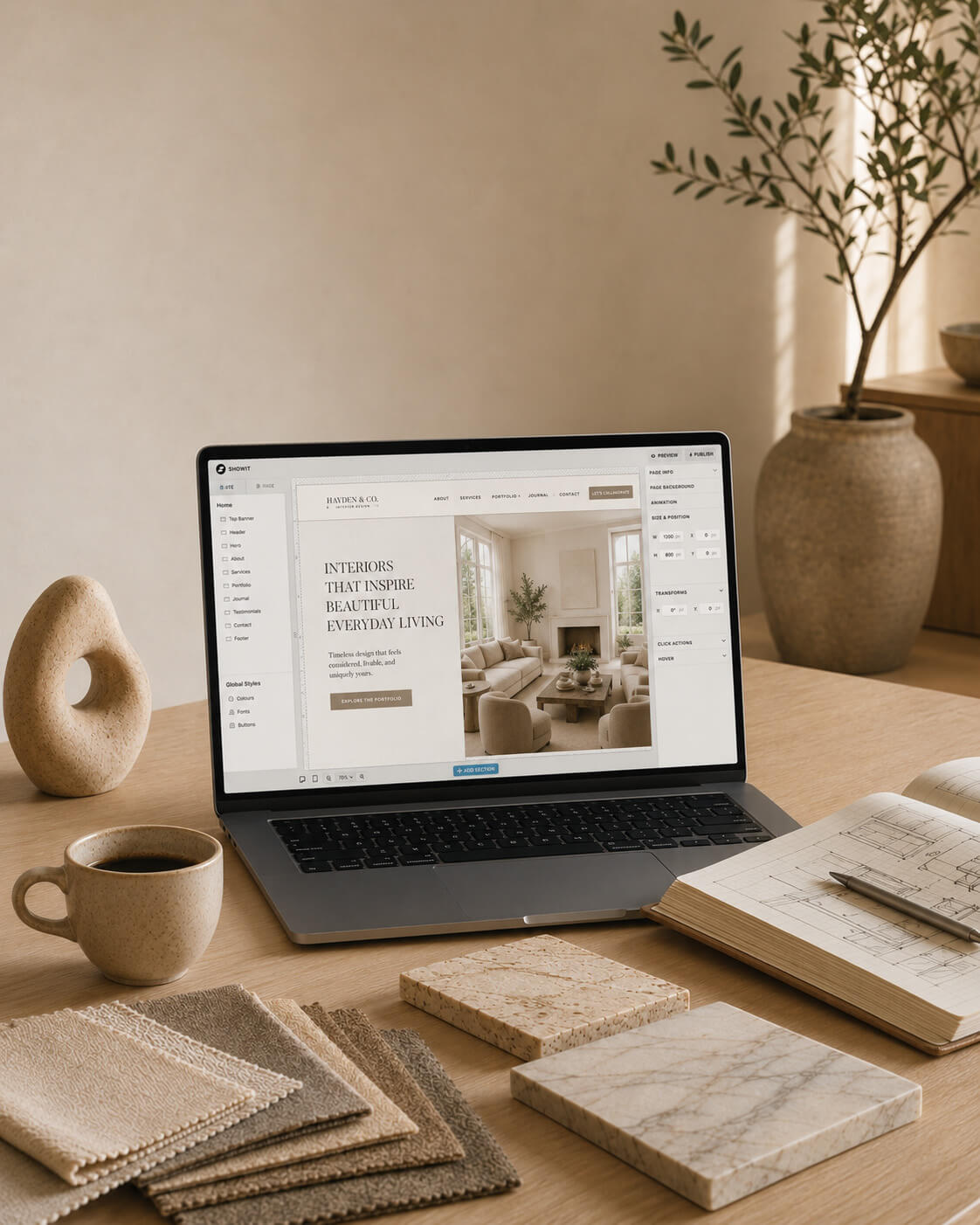
website builder
showit
the drag and drop
platform of dreams.
Showit is the RH of web design platforms. So, if you want a truly exquisite website without the six figure budget and months spent writing endless custom code, look no further.
SUBSCRIPTIONS START AT $22 USD/MONTH, BILLED YEARLY. You get A free month and so does Curator.

photography
sweet ginger
capture the Moments Your Heart will treasure.
It is our great pleasure to introduce you to Virginia. We are so deeply enamoured with her work, you can safely assume that any recent photograph of our CEO or family is a Sweet Ginger creation.
Investments vary by session type. you get a 15-minute mini session for $275 and WE get A $50 credit!

premium custom printing
Jukebox
the printer of dreams for Marketing Collateral
When you need materials to represent your brand in the analog world, trust Jukebox. Their proof system shows you exactly what your products will look like. #goodsurprisesonly
When you spend more than $50 on your order you get $25 off and we get a $25 credit.

Lead Magnets + More
BDOW!
the ultimate integrated conversion system
BDOW! gives you the best combination of features, flexibility, and pricing in the market. No coding required. Just everything you need to build high-converting experiences, connect your systems, and then launch, optimize, and grow.
send us an email to request discount info.

customer relationships
honeybook
Organize your business,
your way, all in one place.
HoneyBook is the software solution that has created the greatest freedom and ease in our business. We can focus on you because of its full suite of business management and client interaction tools.
SUBSCRIPTIONS START AT $16 USD/MONTH, BILLED YEARLY. You get 30% off your first year and we get up to $100.

Project management
Clickup
one (productivity) app
to replace them all.
What HoneyBook is to customer relationship management software, ClickUp is to project management software. We use ClickUp for lead magnet funnel strategies, and so much more.
Free plan available. I get $1.50 for free accounts and up to $20 per seat for paid accounts.

Digital workspace provider
Everything, everywhere, oraganized all at once.
Curator relies on Google Workspace to keep our business balanced with a productive and functional home life. Calendars, email, business and client files; this is how we manage our daily flow.
ask your project's lead designer for a unique promo code to get 10% off your first year.

information security
Keeper
Essential security for your everything.
We've been using Keeper to protect family passwords and streamline our home admin for YEARS. So, when I began my web design career, using Keeper for my business was the easiest choice ever.
Personal Plans begin at $2.92 USD/month. you get 30% Off and I get $30.

Financial management
quickbooks
the world's leader in business accounting
I can faithfully say that this is the most powerful accounting software I've used. While it's true that I appreciate QB's extensive features, its the numerous native integrations I treasure most.
subscriptions start at $24 CAD/month. You get 50% off your first 6 months and i get $100 CAD.

Business banking
Venn
stress-free and low-fee small business banking
We believe this is the most user-friendly and cost-effective business banking account available in Canada today. Sign up online, get instant cards, earn cashback, and don't get shocked by fees.
get an enrolment bonus of $100 when you spend more than $10,000 with your new venn card.

legal protection
WebsitePolicies
Website-Policies
simple cookie consent and privacy compliance
Cookie
& privacy compliance
The role of user activity data in a company's marketing activities is governed by complex legal frameworks. Compliance is essential, and websitepolicies makes it easy to stay on top of requirements.
The role of user activity data in a company's marketing activities is governed by complex legal frameworks. Compliance is essential, and Website-policies makes it easy to stay on track.
WebsitePolicies.com has the best pricing available. Choose the subscription that's right for you.

legal protection
contract shop
like your bff is a lawyer, but better.
like your bff is
a lawyer, but better.
It's no understatement to say that legal protection is an absolute necessity for every person or entity with an online presence. Website T&Cs, client contracts; you name it, you need it.
contract templates vary by type. You get peace of mind (priceless) and i get 20% on each sale.
The
BUSINESS


LOOKING for our INSTAGRAM?
Sorry, you're not going to find it.
Disappointed? Send us a quick note to strike up a conversation or request an in-person chat. We can't wait to meet you!

We respectfully acknowledge that our work takes place on the traditional and ancestral lands of the Treaty 7 region in Southern Alberta. This includes the Blackfoot Confederacy, comprising the Siksika, Piikani, and Kainai Nations, as well as the Tsuut’ina Nation and the Stoney Nakoda Nations of Chiniki, Bearspaw, and Goodstoney. We also recognize that Calgary is home to the Otipemisiwak Métis Government of the Métis Nation within Alberta, Region 3.
We honour the enduring relationships that Indigenous Peoples have with this land,
and we recognize that this territory has been a place of gathering, livelihood,
and cultural connection for over 10,000 years.
We acknowledge the deep and ongoing impacts of colonization, including displacement,
cultural erasure, systemic injustices, and intergenerational trauma that continue to affect
First Nations, Inuit, and Métis communities today. We recognize that
these harms are not only historical, but present and ongoing.
As a business, we are committed to listening, learning, and taking meaningful steps toward reconciliation. We strive to approach our work with respect, humility, and a responsibility to contribute, however we can, to a more equitable and inclusive future.
We honour the enduring relationships that Indigenous Peoples have with this land,
and we recognize that this territory has been a place of gathering, livelihood,
and cultural connection for over 10,000 years.
We acknowledge the deep and ongoing impacts of colonization, including displacement, cultural erasure, systemic injustices, and intergenerational trauma that continue to affect
First Nations, Inuit, and Métis communities today. We recognize that these harms are not only historical, but present and ongoing.
As a business, we are committed to listening, learning, and taking meaningful steps toward reconciliation. We strive to approach our work with respect, humility, and a responsibility to contribute, however we can, to a more equitable and inclusive future.
Home
Creative Services
Web Design
Brand Identity
Graphic Design
Copywriting
Art Direction
Media Curation
Strategy Services
Brand Strategy
Digital Strategy
About
The Archive Blog
Client Exhibitions
Join Curator
Questions & Answers
Contact Us

Showit vs. WordPress and 10 Reasons they Work Best Together

How to Create a Stand-Out Name for Your New Business
