
October 10, 2025
10 Ways the Colour Wheel Can Improve Your Brand Impact
Colour is often the first thing people notice about a brand. Before a visitor reads your website copy, studies your logo, or evaluates your services, colour has already begun shaping their impression. It influences how professional your company feels, how memorable your brand appears, and even how easily someone navigates your content.
Despite its influence, colour selection is often treated as a purely aesthetic choice. Many businesses choose colours based on personal preference or current trends without considering the underlying structure that makes colour systems work effectively. This is where the colour wheel becomes invaluable.
The colour wheel is a practical framework that explains how colours relate to one another and how those relationships can be used to create harmony, contrast, clarity, and visual impact.
At its most fundamental level, the colour wheel organizes colours into primary, secondary, and tertiary groups. The three primary colours, red, blue, and yellow, form the foundation. When these colours are mixed, they create secondary colours such as green, orange, and purple. Tertiary colours emerge when primary and secondary colours combine, producing shades like blue-green, red-orange, and yellow-green.
Arranged in a circular format, the wheel reveals which colours sit beside one another and which sit opposite each other. Those relationships form the basis of many colour strategies used in professional design.
For brands, this understanding transforms colour from decoration into a strategic tool.
Below are ten ways the colour wheel can quietly strengthen the impact, clarity, cohesion, and effectiveness of your visual identity.
1. It Helps You Build a Structured Brand Palette
A strong visual brand identity rarely relies on a single colour. Instead, it operates with a carefully structured palette that creates visual variety while maintaining consistency. The colour wheel helps designers construct this palette intentionally.
One common approach is an analogous colour scheme, which draws colours from neighbouring positions on the wheel. Because these hues share similar pigment foundations, they naturally harmonize. For example, a brand built around deep blue might expand into blue-green and blue-violet accents.
Another method is a monochromatic palette, where a single hue is used in multiple variations by adjusting brightness and saturation. This technique often appears in luxury branding because it creates an elegant, refined appearance without introducing visual clutter.
Designers use the colour wheel to see these relationships immediately, making it easier to expand a palette without introducing colours that feel disconnected.
For businesses, this structure offers flexibility. Marketing materials can use different combinations of colours while still appearing unmistakably aligned with the brand.
Over time, this coherence becomes one of the subtle signals that your company is thoughtful, established, and professional.
2. It Helps Balance Warm and Cool Colours
One of the most visible patterns on the colour wheel is the division between warm and cool colours. Warm colours, such as reds, oranges, and yellows, tend to feel energetic and expressive. They often appear visually closer to the viewer and can create a sense of momentum or enthusiasm.
Cool colours, such as blues, greens, and violets, typically convey calmness, stability, and composure. They tend to recede slightly in visual compositions, creating a more relaxed and balanced atmosphere.
Understanding this distinction allows designers to shape the emotional tone of a brand more deliberately. A brand that wants to communicate dynamism may lean toward warmer tones. A firm emphasizing trust, expertise, or stability may rely more heavily on cooler hues.
The colour wheel helps ensure that these choices remain balanced. A predominantly cool palette, for example, may introduce a small warm accent colour to highlight calls to action or key information. This interplay between warm and cool tones keeps a brand visually engaging without overwhelming the viewer.
3. It Helps You Create Colour Harmony
One of the most valuable insights the colour wheel provides is how certain colour combinations naturally harmonize. Designers refer to these structured combinations as colour harmonies, and they serve as reliable formulas for creating balanced palettes.
A few of the most common include:
- Analogous schemes – colours located beside each other on the wheel
- Complementary schemes – colours positioned directly opposite each other
- Triadic schemes – three colours evenly spaced around the wheel
- Split-complementary schemes – one base colour paired with the two colours adjacent to its complement
Each arrangement produces a slightly different visual effect. Analogous palettes feel calm and cohesive because the colours share similar undertones. Complementary combinations create stronger contrast, as the colours emphasize each other through opposition. Triadic palettes provide variety while maintaining balance.
By referencing the colour wheel, designers can quickly identify these relationships and choose a harmony that aligns with the brand’s character.
4. It Helps You Use Contrast Intentionally
Contrast is one of the most powerful tools in visual communication, as it is essential for ensuring readability and creating a balanced visual hierarchy. Without it, design elements blur together and viewers experience difficulties identifying which content matters most. Beyond the effects of light and shadow, colour wheel reveals where strong contrast naturally occurs.
Complementary colours, which are those positioned directly opposite each other, create the most noticeable visual tension. Blue and orange, red and green, and purple and yellow are classic examples. These pairings intensify one another when placed side by side. This is why complementary colours are often used to highlight key elements within a design.
When used thoughtfully, these pairings can highlight key elements within a design. A predominantly blue brand palette might introduce a muted orange accent for buttons or calls to action to create a natural focal point without requiring additional graphic elements. Because the colours sit opposite each other, the orange immediately draws attention.
The key is moderation. A small amount of complementary contrast can guide the viewer’s eye very effectively without disrupting the overall elegance of the design.
5. It Helps Establish Clear Visual Hierarchy
Visual hierarchy refers to the way design guides a viewer’s attention through information and colour plays a significant role in shaping this hierarchy. Some colours naturally command attention more strongly than others. Warm hues often appear more prominent than cool ones. Highly saturated colours tend to stand out more than muted tones. The colour wheel helps designers predict and control these behaviours.
By combining hue relationships with adjustments in brightness and saturation, designers can subtly guide viewers through content, emphasizing headlines, calls to action, or featured sections while allowing supporting information to remain visually quieter. This creates a more intuitive user experience, particularly on websites where visitors must navigate complex information quickly.
6. It Strengthens Brand Recognition Over Time
One of the most significant advantages of a thoughtfully constructed colour palette is the role it plays in building brand recognition. Over time, colour becomes one of the most immediate identifiers of a company, sometimes even more quickly recognized than typography or logos.
The colour wheel helps establish this recognition by ensuring that your palette is both visually appealing, structurally consistent, and strategically beneficial. When designers create a palette using colour wheel relationships, they are building a system rather than selecting isolated colours.
This system provides a clear set of relationships that can be applied consistently across all brand materials. For example, if your primary brand colour sits in the blue region of the wheel, your supporting colours might include neighbouring tones such as blue-green or blue-violet. Alternatively, you might introduce a complementary accent such as a muted orange for moments that require contrast. Because these colours are chosen through a clear structural relationship, they naturally work together across different contexts.
This becomes especially valuable as a company grows. As new marketing materials are produced, the colour system acts as a guide. Designers and marketing teams know which tones belong within the brand and how they should be used. The palette remains cohesive even as the range of materials expands.
Over time, this consistency creates familiarity. Clients begin to associate certain colours or colour relationships with your company almost instinctively. They may recognize your marketing materials before they even register the logo or read the headline. That kind of recognition is rarely achieved through a single design decision. Instead, it develops gradually through repeated, consistent exposure to a well-structured visual system.
The colour wheel simply provides the framework that makes this consistency possible.
7. It Helps Prevent Colour Clashes
While colour can elevate a brand when used thoughtfully, poorly combined colours can have the opposite effect. Even subtle inconsistencies can make brand materials feel visually unsettled or unintentionally chaotic. This is where the colour wheel becomes particularly useful as a diagnostic tool.
Because the wheel organizes colours according to their relationships on the spectrum, it becomes easier to identify why certain combinations feel harmonious while others feel uncomfortable. Colours that sit close together often share underlying pigments, which naturally allows them to blend smoothly. Colours that sit opposite each other create contrast that feels purposeful rather than accidental.
When colours are selected without reference to these relationships, problems can arise. For example, two colours may appear attractive individually but clash when used together because they sit at awkward intervals on the spectrum or share similar brightness levels without enough contrast. The result can feel visually tense, even if it is difficult to articulate exactly why.
The colour wheel allows designers to analyze these issues more clearly. If a palette feels discordant, the wheel often reveals the source of the problem. Perhaps two colours are competing for attention because they are both highly saturated. Perhaps the palette lacks contrast because all the colours sit within the same narrow portion of the wheel.
With that insight, adjustments can be made strategically. Designers might soften a colour by reducing saturation, shifting it slightly toward a neighbouring hue, or introducing a complementary accent that restores balance.
For businesses, this framework becomes especially valuable as more people begin working with the brand, like marketing teams, external designers, print vendors, and digital developers. A clear colour structure ensures that everyone understands how colours should interact.
The result is a visual identity that remains polished and harmonious across every platform.
8. It Makes Campaign and Seasonal Variations Easier
Even the most carefully developed brand identity occasionally needs to evolve. Marketing campaigns, seasonal promotions, product launches, and special initiatives often benefit from introducing new visual energy. However, without a clear colour system, these variations can unintentionally drift away from the core brand identity.
This is another situation where the colour wheel proves extremely useful. Because your original palette is built on defined relationships, it becomes easier to expand that palette in ways that remain visually aligned. Rather than introducing entirely unrelated colours, designers can draw additional tones from neighbouring areas of the wheel.
For example, if a brand’s primary palette centres on deep blue and soft blue-green, a seasonal campaign might introduce cooler teal accents or muted turquoise tones. Because these hues sit nearby on the colour wheel, they still feel connected to the original palette.
Another approach involves adjusting saturation or brightness rather than hue. A winter campaign might use deeper, richer versions of existing colours, while a summer initiative might introduce lighter or more vibrant variations. The colour wheel helps guide these decisions by clarifying how the underlying hues relate to one another.
In some cases, designers may also introduce a limited complementary accent to create visual interest. For instance, a predominantly cool palette could include a small amount of warm contrast, perhaps a subtle coral or amber, to highlight seasonal messaging.
The key is that these additions are intentional rather than random. By using the colour wheel as a reference, brands can introduce variety without sacrificing consistency. Campaigns feel fresh and visually engaging while still remaining unmistakably connected to the brand’s core identity. This balance between consistency and flexibility is one of the hallmarks of a well-designed visual system.
9. It Supports Accessibility and Readability
Colour choices do so much more than influence aesthetics; they also affect usability. A visually beautiful design is far less effective if the content is difficult to read or navigate. Accessibility is an increasingly important consideration in modern design, and colour plays a significant role in supporting it.
The colour wheel provides helpful guidance in selecting combinations that maintain both harmony and sufficient contrast. One of the most important principles is value contrast, which refers to the difference in lightness or darkness between two colours. Even colours that appear quite different on the wheel may become difficult to distinguish if their brightness levels are too similar.
For example, blue text placed on a slightly darker blue background may technically involve different hues, but the minimal value contrast makes the text difficult to read. By analyzing colour relationships through the lens of the wheel and adjusting brightness, saturation, or complementary pairings, designers can create combinations that remain both elegant and legible.
Complementary colours often provide strong contrast when used carefully. However, they must still be balanced appropriately so that the overall design does not become visually overwhelming. Headings, body text, and interactive elements such as buttons should stand out clearly from their background while still feeling integrated into the palette. When this balance is achieved, users can navigate the information effortlessly.
From a brand perspective, accessibility communicates care. It demonstrates that the company has considered the experience of a diverse audience and prioritized clarity in its communication. The colour wheel simply provides the structural understanding needed to achieve that balance consistently.
10. It Transforms Colour From Decoration Into Strategy
Perhaps the most meaningful benefit of the colour wheel is the shift in perspective it encourages. When colour is chosen without a framework, it often becomes a decorative decision, like impulsively something added at the end of a design process in an attempt to make materials look attractive. While the result may still be visually pleasing, the colour choices rarely serve a larger purpose.
The colour wheel invites a more strategic approach. By understanding how hues relate to one another, designers can begin using colour as an intentional communication tool. Designers dedicate significant time to considering how complementary colours create contrast, how analogous colours produce harmony, and how warm and cool tones influence perception. Each colour within the palette starts to carry a role.
In a colour palette, featured colours establish brand recognition and emotional tone, while supporting colours organize content or create visual rhythm. Accent colours are used to highlight actions, calls to attention, or moments of emphasis. Rather than competing for attention, these colours work together within a structured system.
The colour wheel also encourages long-term thinking. Because the palette is built on clear relationships, it can evolve gracefully over time. New materials, campaigns, and design elements can be introduced without disrupting the identity that clients already recognize.
In this way, colour becomes part of the brand’s strategic foundation rather than a surface-level aesthetic choice. When used thoughtfully, colour guides attention, shapes perception, and strengthens consistency across every interaction a client has with your company. And in branding, those subtle layers of intention are often what distinguish a merely attractive design from one that leaves a lasting impression.
The Subtle Power of a Thoughtful Colour System
When businesses think about branding, they often focus on logos or typography first. Colour, however, quietly influences almost every aspect of how a brand is perceived. The colour wheel offers a simple yet powerful framework for understanding how colours interact and how those relationships can be used strategically.
By building a colour palette through clear colour relationships, brands create visual systems that feel both cohesive and memorable. In many ways, the colour wheel simply brings structure to something we already experience instinctively. It allows businesses to move beyond guesswork and use colour with clarity and intention, ensuring that every visual interaction reinforces the story their brand is trying to tell.
Presenting Our Recent Work :
Return to the Archive Blog X



BORN & RAISED IN Calgary, Alberta AND IS
our ceo & lead designer WAS
proudly
Canadian
proudly Canadian.
Lauren Killam draws creative inspiration from both her academic background and global experiences. With a foundation in applied mathematics and anthropology, she brings a thoughtful blend of analytical precision and cultural curiosity to every project. Having lived in the Middle East and California before returning to Calgary, Lauren infuses her work with a rich mix of perspectives that are grounded in strategy, guided by empathy, and always ready to challenge the status quo.
Based in Calgary, Alberta and Proudly Canadian • Web Design • Graphic Design • Marketing Strategy • Visual Branding • Copy Writing • Product Development • Email Design • Social Media Design • SEO • Image Curation • Website Auditing • Based in Calgary, Alberta and Proudly Canadian • Web Design • Graphic Design • Marketing Strategy • Visual Branding • Copy Writing • Product Development • Email Design • Social Media Design • SEO • Image Curation • Website Auditing • Based in Calgary, Alberta and Proudly Canadian • Web Design • Graphic Design • Marketing Strategy • Visual Branding • Copy Writing • Product Development • Email Design • Social Media Design • SEO • Image Curation • Website Auditing • Based in Calgary, Alberta and Proudly Canadian • Web Design • Graphic Design • Marketing Strategy • Visual Branding • Copy Writing • Product Development • Email Design • Social Media Design • SEO • Image Curation • Website Auditing • Based in Calgary, Alberta and Proudly Canadian • Web Design • Graphic Design • Marketing Strategy • Visual Branding • Copy Writing • Product Development • Email Design • Social Media Design • SEO • Image Curation • Website Auditing •
Based in Calgary, Alberta and Proudly Canadian • Web Design • Graphic Design • Marketing Strategy • Visual Branding • Copy Writing • Product Development • Email Design • Social Media Design • SEO • Image Curation • Website Auditing • Based in Calgary, Alberta and Proudly Canadian • Web Design • Graphic Design • Marketing Strategy • Visual Branding • Copy Writing • Product Development • Email Design • Social Media Design • SEO • Image Curation • Website Auditing • Based in Calgary, Alberta and Proudly Canadian • Web Design • Graphic Design • Marketing Strategy • Visual Branding • Copy Writing • Product Development • Email Design • Social Media Design • SEO • Image Curation • Website Auditing •
Based in Calgary, Alberta and Proudly Canadian • Web Design • Graphic Design • Marketing Strategy • Visual Branding • Copy Writing • Product Development • Email Design • Social Media Design • SEO • Image Curation • Website Auditing • Based in Calgary, Alberta and Proudly Canadian • Web Design • Graphic Design • Marketing Strategy • Visual Branding • Copy Writing • Product Development • Email Design • Social Media Design • SEO • Image Curation • Website Auditing • Based in Calgary, Alberta and Proudly Canadian • Web Design • Graphic Design • Marketing Strategy • Visual Branding • Copy Writing • Product Development • Email Design • Social Media Design • SEO • Image Curation • Website Auditing • Based in Calgary, Alberta and Proudly Canadian • Web Design • Graphic Design • Marketing Strategy • Visual Branding • Copy Writing • Product Development • Email Design • Social Media Design • SEO • Image Curation • Website Auditing • Based in Calgary, Alberta and Proudly Canadian • Web Design • Graphic Design • Marketing Strategy • Visual Branding • Copy Writing • Product Development • Email Design • Social Media Design • SEO • Image Curation • Website Auditing •
Based in Calgary, Alberta and Proudly Canadian • Web Design • Graphic Design • Marketing Strategy • Visual Branding • Copy Writing • Product Development • Email Design • Social Media Design • SEO • Image Curation • Website Auditing • Based in Calgary, Alberta and Proudly Canadian • Web Design • Graphic Design • Marketing Strategy • Visual Branding • Copy Writing • Product Development • Email Design • Social Media Design • SEO • Image Curation • Website Auditing • Based in Calgary, Alberta and Proudly Canadian • Web Design • Graphic Design • Marketing Strategy • Visual Branding • Copy Writing • Product Development • Email Design • Social Media Design • SEO • Image Curation • Website Auditing •


Explore Our services
BrAND
IDENTITY
Refined branding that captures the heart of your business with clarity and elegance, leaving a lasting impression with every detail.
pause

Explore Our services
Graphic Design
Purposeful design that seamlessly blends style and function, crafting interactive experiences your audience will come to trust and depend on.
pause

Explore Our services
copy- writing
Carefully crafted copy that speaks with clarity and purpose, capturing your brand voice and compelling your audience to take action.
pause

Explore Our services
art direction
Curated art direction guides visual storytelling, upholding brand compliance and business objectives across multi-disciplinary teams.
pause

Explore Our services
Media curation
Thoughtfully curated media that aligns with your brand’s identity, bringing your message to life with authenticity and visual impact.
pause

Explore Our services
marketing strategy
Integrated, thoughtful strategy that bridges design and direction, shaping a clear path to attract and convert ideal clients with purpose and precision.
pause


Explore Our services
Search & AI
Optimization
Strategic search engine and AI optimization that amplifies your online presence, boosting visibility, driving traffic, and enhancing user experience.
pause

explore The Archive
explore
The Archive
Think of our blog as your insider pass to our private catalogue. You'll find expert insights and inspired guidance on everything from web design and copywriting to marketing strategy and creative inspiration. It’s all beautifully curated to help your business grow with style.

platform comparison

hot off the press

essential article
these are a few of
Our Things
Our
Things
favourite
QUICK DISCLOSURE
Many of the sections listed below contain affiliate links for products and services that our CEO has used and loved for years. This simply means that we may receive a commission if you purchase something from this page. It won't cost you more (in fact, a lot of these programs actually include special offers that save you money) and it really helps us out. Plus, ya know, we were going to share it with you anyway!

website builder
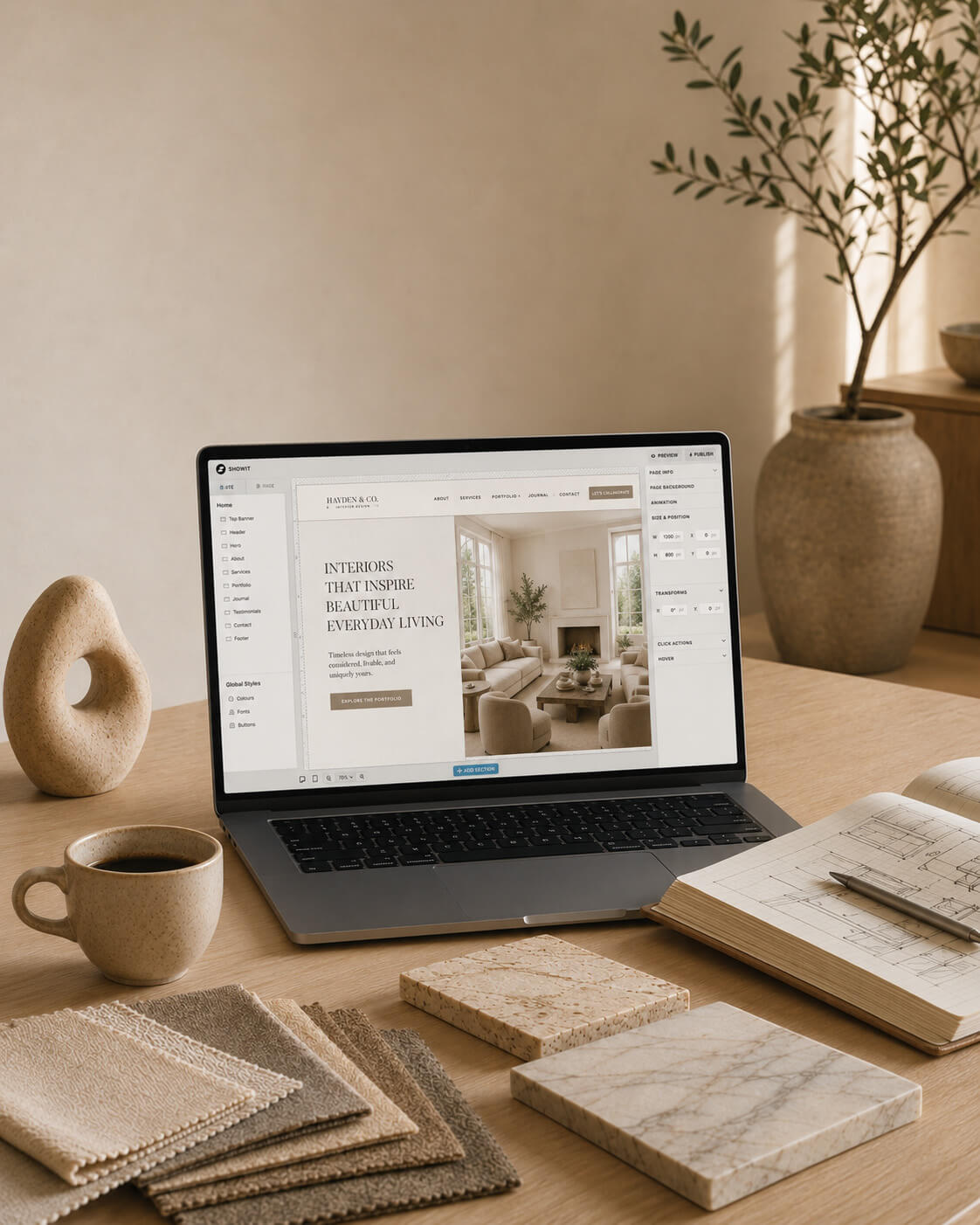
showit
the drag and drop
platform of dreams.
Showit is the RH of web design platforms. So, if you want a truly exquisite website without the six figure budget and months spent writing endless custom code, look no further.
SUBSCRIPTIONS START AT $22 USD/MONTH, BILLED YEARLY. You get A free month and so does Curator.

photography
sweet ginger
capture the Moments Your Heart will treasure.
It is our great pleasure to introduce you to Virginia. We are so deeply enamoured with her work, you can safely assume that any recent photograph of our CEO or family is a Sweet Ginger creation.
Investments vary by session type. you get a 15-minute mini session for $275 and WE get A $50 credit!

premium custom printing
Jukebox
the printer of dreams for Marketing Collateral
When you need materials to represent your brand in the analog world, trust Jukebox. Their proof system shows you exactly what your products will look like. #goodsurprisesonly
When you spend more than $50 on your order you get $25 off and we get a $25 credit.

Lead Magnets + More
BDOW!
the ultimate integrated conversion system
BDOW! gives you the best combination of features, flexibility, and pricing in the market. No coding required. Just everything you need to build high-converting experiences, connect your systems, and then launch, optimize, and grow.
send us an email to request discount info.

customer relationships
honeybook
Organize your business,
your way, all in one place.
HoneyBook is the software solution that has created the greatest freedom and ease in our business. We can focus on you because of its full suite of business management and client interaction tools.
SUBSCRIPTIONS START AT $16 USD/MONTH, BILLED YEARLY. You get 30% off your first year and we get up to $100.

Project management
Clickup
one (productivity) app
to replace them all.
What HoneyBook is to customer relationship management software, ClickUp is to project management software. We use ClickUp for lead magnet funnel strategies, and so much more.
Free plan available. I get $1.50 for free accounts and up to $20 per seat for paid accounts.

Digital workspace provider
Everything, everywhere, oraganized all at once.
Curator relies on Google Workspace to keep our business balanced with a productive and functional home life. Calendars, email, business and client files; this is how we manage our daily flow.
ask your project's lead designer for a unique promo code to get 10% off your first year.

information security
Keeper
Essential security for your everything.
We've been using Keeper to protect family passwords and streamline our home admin for YEARS. So, when I began my web design career, using Keeper for my business was the easiest choice ever.
Personal Plans begin at $2.92 USD/month. you get 30% Off and I get $30.

Financial management
quickbooks
the world's leader in business accounting
I can faithfully say that this is the most powerful accounting software I've used. While it's true that I appreciate QB's extensive features, its the numerous native integrations I treasure most.
subscriptions start at $24 CAD/month. You get 50% off your first 6 months and i get $100 CAD.

Business banking
Venn
stress-free and low-fee small business banking
We believe this is the most user-friendly and cost-effective business banking account available in Canada today. Sign up online, get instant cards, earn cashback, and don't get shocked by fees.
get an enrolment bonus of $100 when you spend more than $10,000 with your new venn card.

legal protection
WebsitePolicies
Website-Policies
simple cookie consent and privacy compliance
Cookie
& privacy compliance
The role of user activity data in a company's marketing activities is governed by complex legal frameworks. Compliance is essential, and websitepolicies makes it easy to stay on top of requirements.
The role of user activity data in a company's marketing activities is governed by complex legal frameworks. Compliance is essential, and Website-policies makes it easy to stay on track.
WebsitePolicies.com has the best pricing available. Choose the subscription that's right for you.

legal protection
contract shop
like your bff is a lawyer, but better.
like your bff is
a lawyer, but better.
It's no understatement to say that legal protection is an absolute necessity for every person or entity with an online presence. Website T&Cs, client contracts; you name it, you need it.
contract templates vary by type. You get peace of mind (priceless) and i get 20% on each sale.
The
BUSINESS


LOOKING for our INSTAGRAM?
Sorry, you're not going to find it.
Disappointed? Send us a quick note to strike up a conversation or request an in-person chat. We can't wait to meet you!

We respectfully acknowledge that our work takes place on the traditional and ancestral lands of the Treaty 7 region in Southern Alberta. This includes the Blackfoot Confederacy, comprising the Siksika, Piikani, and Kainai Nations, as well as the Tsuut’ina Nation and the Stoney Nakoda Nations of Chiniki, Bearspaw, and Goodstoney. We also recognize that Calgary is home to the Otipemisiwak Métis Government of the Métis Nation within Alberta, Region 3.
We honour the enduring relationships that Indigenous Peoples have with this land,
and we recognize that this territory has been a place of gathering, livelihood,
and cultural connection for over 10,000 years.
We acknowledge the deep and ongoing impacts of colonization, including displacement,
cultural erasure, systemic injustices, and intergenerational trauma that continue to affect
First Nations, Inuit, and Métis communities today. We recognize that
these harms are not only historical, but present and ongoing.
As a business, we are committed to listening, learning, and taking meaningful steps toward reconciliation. We strive to approach our work with respect, humility, and a responsibility to contribute, however we can, to a more equitable and inclusive future.
We honour the enduring relationships that Indigenous Peoples have with this land,
and we recognize that this territory has been a place of gathering, livelihood,
and cultural connection for over 10,000 years.
We acknowledge the deep and ongoing impacts of colonization, including displacement, cultural erasure, systemic injustices, and intergenerational trauma that continue to affect
First Nations, Inuit, and Métis communities today. We recognize that these harms are not only historical, but present and ongoing.
As a business, we are committed to listening, learning, and taking meaningful steps toward reconciliation. We strive to approach our work with respect, humility, and a responsibility to contribute, however we can, to a more equitable and inclusive future.
Home
Creative Services
Web Design
Brand Identity
Graphic Design
Copywriting
Art Direction
Media Curation
Strategy Services
Brand Strategy
Digital Strategy
About
The Archive Blog
Client Exhibitions
Join Curator
Questions & Answers
Contact Us

Showit vs. WordPress and 10 Reasons they Work Best Together

How to Create a Stand-Out Name for Your New Business
