November 7, 2025
How to Create a Stand-Out Name for Your New Business
Before a client experiences your services, before they read a single page of your website, and often before they encounter your visual identity, they will encounter something much more potent: your name.
A business name is often the first point of contact between a company and the world around it. It appears in search results, referrals, introductions, recommendations, and conversations. Over time, it becomes the word that people associate with your reputation, your expertise, and the experience you provide.
Yet for many founders, choosing that name can feel unexpectedly difficult. The process tends to unfold somewhere between creativity and strategy. You may begin with a long list of possibilities ranging from poetic to playful, only to discover that very few truly feel right.
A stand-out business name rarely appears by accident. The most memorable names tend to emerge from thoughtful consideration of brand positioning, audience perception, and long-term growth. Brand names fall flat when they are created by haphazardly slapping clever words together. A name that can compete in the marketplace must also serve as the foundations for a brand’s full identity.
If you are currently naming a new company, it can be helpful to approach the process with a clear framework. The following principles offer a thoughtful path forward: one that balances creativity with strategic clarity and ensures your brand name supports the company you are building.
Begin with Your Brand’s Core Concept
Before searching for words, it is helpful to pause and reflect on the function your business will perform in society. Every strong brand is built around a central concept. This may involve the type of transformation you provide for clients, the philosophy that guides your work, or the values that distinguish your company within its industry.
A name that resonates tends to reflect a company’s core vision or values and its role in the lives your brand will touch.
For example, an architectural company that emphasizes precision and structure might gravitate toward language that feels analytical. An interior design brand centred around creating lively, joyful spaces may prefer names that evoke movement, discovery, or artistry.
While it is not always necessary to state your mission directly within the name itself, the most elegant names often allude to meaning instead of making an explicit statement. However, having clarity about your brand’s essence will naturally guide the language you explore.
When founders skip this step, naming often becomes frustrating. Words are chosen simply because they sound appealing, rather than because they reinforce the identity the company hopes to establish.
A thoughtful naming process therefore begins with reflection.
Ask yourself:
- What concept sits at the heart of this business?
- How should people feel when they encounter the brand?
- What qualities would you like your company to be known for over time?
Your answers will almost certainly shape the vocabulary that follows.
Consider the Experience Your Name Creates
In addition to identifying a company, an effective brand name creates an emotional and intellectual experience for the audience encountering it. Some names feel elegant and refined. Others feel energetic, modern, or playful. The rhythm of the word, the sounds it contains, and the associations it evokes all influence how it is perceived.
For this reason, it can be helpful to say potential names aloud. Spoken language reveals nuances that written text sometimes conceals. A name that appears appealing on paper may feel awkward or overly complex when spoken in conversation.
Imagine introducing your company at a conference or during a client meeting. Does the name feel natural to say? Does it invite curiosity? Is it sound aligned with the level of professionalism you wish to convey?
It can also be useful to consider how the name might appear visually. Certain names translate beautifully into logos and design systems because they contain distinctive letterforms or clear structural balance. Long names can be particularly awkward to incorporate in logos. In some cases, a particularly long name may push up against design best practices, like minimum font size, in some contexts.
Skilled copywriters help clients navigate the naming process with both creativity and strategy. They work to develop names that reinforce brand positioning, resonate with ideal audiences, and establish a strong foundation for long-term growth. This work must also be guided by robust knowledge of design first principles and established best practices in order to ensure that a beautiful visual brand system can follow.
Ultimately, a strong business name should feel comfortable across multiple contexts: spoken conversation, written communication, digital search results, and visual branding.
Balance Distinctiveness with Clarity
Many founders initially assume that a memorable business name must be highly unusual. While distinctiveness can play a significant role, clarity is often just as important.
A name that is too abstract or difficult to interpret can create confusion rather than curiosity. Conversely, a name that simply describes the service provided may struggle to stand out in a crowded market. In many cases, particularly for small business, the most effective names tend to balance these two qualities.
Some companies achieve a memorable brand name by combining familiar words in unexpected ways. Others rely on metaphor, drawing inspiration from art, science, history, geography, cultural concepts, or folklore. Still others create subtle layers of meaning that become clearer as audiences become familiar with the brand.
For example, a thoughtfully chosen metaphor can communicate an idea about the company’s philosophy without requiring a literal description. When metaphors are used, it is essential to be mindful of the level of cultural penetration the metaphor has achieved in your ideal audience in order to strike a balance between distinctiveness and obscurity.
This balance between originality and comprehension is one of the reasons naming often benefits from careful exploration rather than immediate decisions. Allowing yourself time to experiment with language can reveal combinations that feel both distinctive and intuitive.
Ensure Your Name Supports Long-Term Growth
When choosing a business name, it is natural to focus on the present moment. However, a name will ideally serve your company for many years. For this reason, it is worth considering how the name might function as your business evolves.
If the name is overly specific by referencing a single product, location, or niche service, it may become restrictive as your offerings expand. A more flexible name can grow with the company while still maintaining its identity.
This does not mean the name must be vague or generic. Rather, it should leave room for the brand to develop naturally over time. Consider where you hope the business might be in five or ten years. Will the name still feel appropriate if the company enters new markets or introduces additional services?
Taking a long-term perspective now can prevent the need for rebranding later.
Think About Searchability and Digital Presence
In the modern business landscape, a company name also functions as part of its digital infrastructure. Prospective clients will often encounter your brand through search engines, social platforms, and online directories. A distinctive name can make this discovery process significantly easier.
If your name is similar to existing companies or commonly used phrases, it may become difficult for audiences to find your business online.
When evaluating potential names, it can be helpful to conduct simple searches to see what already exists. Consider whether the name is associated with unrelated industries, existing trademarks, or widely used terms.
Availability of a suitable website domain is also worth checking early in the process. While domain extensions have expanded considerably in recent years, securing a clear and recognizable web address remains valuable.
These practical considerations do not need to limit creativity, but they can guide decisions toward names that are both memorable and practical.
Test the Name in Real-World Contexts
Once you have developed a shortlist of potential names, the most useful step is often the simplest: try them in real-world situations.
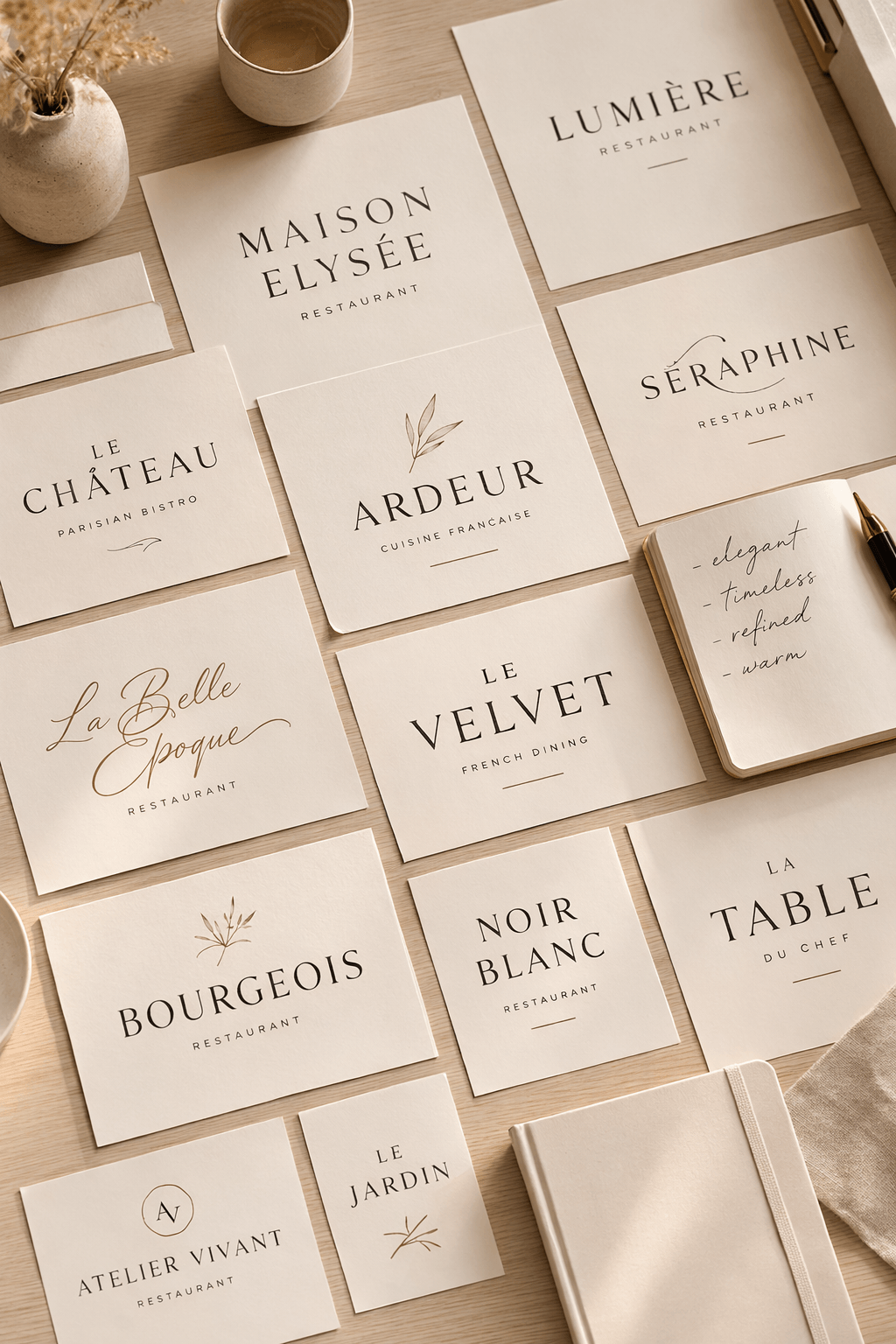
Imagine the name on a website header, a business card, or a presentation slide. Picture how it might appear within a logo or visual identity system. Consider how it would sound when someone recommends your company to a colleague.
You might also share a few options with trusted advisors or collaborators. Their reactions can reveal subtle impressions that are easy to overlook when you have been immersed in the naming process.
At this stage, the goal is not to conduct extensive market research, but simply to observe how the name resonates with thoughtful listeners.
Often, one option will begin to stand out. Pay particular attention to names that feel balanced, clear, and aligned with the brand you are creating.
Allow Space for Intuition
While a thoughtful naming process benefits from structure and strategy, it is equally important to leave room for intuition. Not every successful brand name emerges solely from analytical exercises. In many cases, the most resonant names appear at the intersection of research, reflection, and creative instinct.
Intuition in this context does not mean making a random or impulsive decision. Rather, it refers to the deeper understanding that develops when someone becomes thoroughly immersed in a project. After spending time exploring a company’s purpose, values, ideal clients, and long-term vision, certain words or ideas often begin to feel naturally aligned with the brand. They carry a sense of clarity and coherence that can be difficult to fully explain, yet are immediately recognizable when encountered.
Experienced brand strategists and copywriters often describe this moment as the point when a name “clicks.” It may surface during a brainstorming session, while reviewing notes, or even during a quiet moment away from the desk. When a name captures the essence of a company’s vision while also feeling distinctive and memorable, it often signals that both strategic thinking and creative intuition have come together successfully.
Allowing space for intuition also requires patience. Naming is not a process that can be rushed. Many of the strongest brand names emerge only after ideas have had time to evolve. Taking breaks, revisiting concepts later, and allowing thoughts to develop gradually can often reveal connections that were not immediately obvious.
At the same time, intuition should always be balanced with practical evaluation. Once a promising name emerges, it should still be reviewed carefully for clarity, relevance, and distinctiveness. It must resonate with the intended audience, support the broader brand strategy, and function effectively across marketing materials and digital platforms.
In this way, intuition becomes a valuable complement to strategy rather than a replacement for it. When both elements are given space within the naming process, the result is often a brand name that feels both thoughtful and effortless; a name that not only makes sense on paper, but also feels naturally right for the company it represents.
The Beginning of a Larger Story
Choosing a name is an important step, but it is also only the beginning of the brand-building journey. Once a name is established, it becomes the foundation upon which visual identity, messaging, and marketing strategy are built. Typography, colour systems, website design, and brand voice will all develop in conversation with the name you have chosen.
Over time, the meaning of the name expands through the experiences your company creates for its clients. What begins as a single word gradually becomes associated with expertise, trust, and reputation.
In this sense, a stand-out business name is the first chapter of a much larger story, one that your brand will continue to write through the quality of its work and the relationships it builds. By approaching the naming process thoughtfully, you ensure that this story begins on a strong and strategic note.
Naming in Practice: Collaborating with Clients to Create Meaningful Brand Names
While the principles of naming are useful in theory, they become most meaningful when applied in real-world contexts. Each company brings its own history, ambitions, and values to the naming process, and the final result is often shaped through thoughtful collaboration between founder and copywriter.
Two of Curator’s client exhibits offer helpful examples of how this process unfolds.
Client Exhibit #1: GreenKey Energy
When energy professional Luke Killam approached Curator to develop the exclusive brand and website for his new consulting company, he brought with him a remarkable breadth of experience. His career had spanned multiple areas of the energy sector, including oil sands, gas-to-liquids, and onshore renewable energy. What he hoped to build, however, was something forward-looking: a consulting firm dedicated to helping Canadian homeowners, businesses, municipalities, and governments secure long-term energy solutions to provide Canadians with energy security, energy independence, and energy sovereignty.
From the outset, Luke approached the naming process with a refreshing openness. He granted Curator full creative freedom while remaining deeply engaged in the strategic discussions that would ultimately shape the brand.
The first stage of the process focused on developing the company’s foundational strategy. Together, we articulated Luke’s vision and mission for the company and carefully constructed four ideal client profiles. These strategic pillars helped clarify the role the company would play within Canada’s evolving energy landscape, supporting clients in achieving energy security and long-term economic stability through thoughtful energy planning.
Once these strategic elements were established, we began exploring language that aligned with the company’s ethos and objectives.
The name GreenKey emerged to Curator’s CEO and lead designer, Lauren Killam, during this exploration. Conceptually, the word “key” suggests access, solutions, and the unlocking of new possibilities. Paired with “green,” it communicates the company’s commitment to both fiscal growth and renewable energy while avoiding language that feels overly technical or restrictive.
The addition of the word Energy provides immediate clarity for first-time visitors, ensuring that the company’s sector is understood at a glance.
The final name, GreenKey Energy, strikes a careful balance between symbolism and practicality. It reflects the company’s core value proposition while remaining intuitive, distinctive, and easy to remember.
The reception from industry professionals has been overwhelmingly positive, and it has been deeply rewarding to see the name resonate with audiences across the energy sector. As the company continues to grow, we look forward to celebrating the many successes that will be associated with the GreenKey Energy name.
Client Exhibit #2: Peaceful Path Divorce Consulting & Mediation
The second example illustrates how naming can help guide an entire brand transformation.
When Orla McGrogan approached Curator, her business was operating under the name Kickstart Divorce Consulting. While the name had served its purpose in the early stages of her career, Orla felt it no longer reflected the compassionate and supportive environment she wished to create for her clients.
Her new vision for the company emphasized gentleness, understanding, and emotional care during what is often one of life’s most difficult transitions.
As with all of our projects, the process began with strategy. Together we clarified Orla’s brand vision, mission, and values, developing a framework that reflected her deeply empathetic approach to divorce consulting.
During our early conversations, Orla spoke about one of the practices that grounded her personally: walking in the mountains. These walks provided time for reflection and helped her maintain the calm perspective that she brings to her work with clients. Inspired by this imagery, Curator’s CEO and lead designer, Lauren Killam suggested the name Peaceful Path.
The phrase resonated with Orla immediately. It captured the emotional tone she wished to convey while subtly referencing the journey that clients undertake as they move through the divorce process. It also reflected the quiet symbolism of a mountain path as being a steady, supportive, and guiding force that moves toward a more stable future.
The full brand name, Peaceful Path Divorce Consulting & Mediation, balances warmth with clarity. The phrase “Peaceful Path” provides the emotional narrative, while the descriptor “Divorce Consulting & Mediation” communicates the company’s services directly.
Interestingly, the second half of the name evolved organically over time. Initially, Orla chose to describe her services as Divorce Consulting. As the company continued into its start-up phase, Orla decided to modify her business name to include mediation in order to provide additional specificity for prospective clients.
From a design perspective, the name Peaceful Path provided a beautiful foundation for the rest of the brand system. The colour palette, typography, imagery, and written voice all grew organically from the tone established by the name itself.
A Name as the Beginning of a Brand
Both the GreenKey Energy and Peaceful Path brand names demonstrate the power of thoughtful naming. These potent names are symbolic yet clear, emotionally resonant yet practical, and ultimately memorable for the clients they serve.
These exhibitions illustrate an important idea: a successful business name rarely emerges in isolation. Instead, it grows from a careful understanding of the founder’s vision, the needs of the audience, and the broader environment in which the company operates. When these elements align, the name becomes a foundation that carries meaning, invites curiosity, and supports the brand as it grows.
For founders navigating the naming process as part of the development of a new brand identity, this can be reassuring. With thoughtful strategy, collaboration, and creativity, a brand story can begin with a name that feels both distinctive and deeply aligned with the work you do.
Presenting Our Recent Work :
Return to the Archive Blog X



BORN & RAISED IN Calgary, Alberta AND IS
our ceo & lead designer WAS
proudly
Canadian
proudly Canadian.
Lauren Killam draws creative inspiration from both her academic background and global experiences. With a foundation in applied mathematics and anthropology, she brings a thoughtful blend of analytical precision and cultural curiosity to every project. Having lived in the Middle East and California before returning to Calgary, Lauren infuses her work with a rich mix of perspectives that are grounded in strategy, guided by empathy, and always ready to challenge the status quo.
Based in Calgary, Alberta and Proudly Canadian • Web Design • Graphic Design • Marketing Strategy • Visual Branding • Copy Writing • Product Development • Email Design • Social Media Design • SEO • Image Curation • Website Auditing • Based in Calgary, Alberta and Proudly Canadian • Web Design • Graphic Design • Marketing Strategy • Visual Branding • Copy Writing • Product Development • Email Design • Social Media Design • SEO • Image Curation • Website Auditing • Based in Calgary, Alberta and Proudly Canadian • Web Design • Graphic Design • Marketing Strategy • Visual Branding • Copy Writing • Product Development • Email Design • Social Media Design • SEO • Image Curation • Website Auditing • Based in Calgary, Alberta and Proudly Canadian • Web Design • Graphic Design • Marketing Strategy • Visual Branding • Copy Writing • Product Development • Email Design • Social Media Design • SEO • Image Curation • Website Auditing • Based in Calgary, Alberta and Proudly Canadian • Web Design • Graphic Design • Marketing Strategy • Visual Branding • Copy Writing • Product Development • Email Design • Social Media Design • SEO • Image Curation • Website Auditing •
Based in Calgary, Alberta and Proudly Canadian • Web Design • Graphic Design • Marketing Strategy • Visual Branding • Copy Writing • Product Development • Email Design • Social Media Design • SEO • Image Curation • Website Auditing • Based in Calgary, Alberta and Proudly Canadian • Web Design • Graphic Design • Marketing Strategy • Visual Branding • Copy Writing • Product Development • Email Design • Social Media Design • SEO • Image Curation • Website Auditing • Based in Calgary, Alberta and Proudly Canadian • Web Design • Graphic Design • Marketing Strategy • Visual Branding • Copy Writing • Product Development • Email Design • Social Media Design • SEO • Image Curation • Website Auditing •
Based in Calgary, Alberta and Proudly Canadian • Web Design • Graphic Design • Marketing Strategy • Visual Branding • Copy Writing • Product Development • Email Design • Social Media Design • SEO • Image Curation • Website Auditing • Based in Calgary, Alberta and Proudly Canadian • Web Design • Graphic Design • Marketing Strategy • Visual Branding • Copy Writing • Product Development • Email Design • Social Media Design • SEO • Image Curation • Website Auditing • Based in Calgary, Alberta and Proudly Canadian • Web Design • Graphic Design • Marketing Strategy • Visual Branding • Copy Writing • Product Development • Email Design • Social Media Design • SEO • Image Curation • Website Auditing • Based in Calgary, Alberta and Proudly Canadian • Web Design • Graphic Design • Marketing Strategy • Visual Branding • Copy Writing • Product Development • Email Design • Social Media Design • SEO • Image Curation • Website Auditing • Based in Calgary, Alberta and Proudly Canadian • Web Design • Graphic Design • Marketing Strategy • Visual Branding • Copy Writing • Product Development • Email Design • Social Media Design • SEO • Image Curation • Website Auditing •
Based in Calgary, Alberta and Proudly Canadian • Web Design • Graphic Design • Marketing Strategy • Visual Branding • Copy Writing • Product Development • Email Design • Social Media Design • SEO • Image Curation • Website Auditing • Based in Calgary, Alberta and Proudly Canadian • Web Design • Graphic Design • Marketing Strategy • Visual Branding • Copy Writing • Product Development • Email Design • Social Media Design • SEO • Image Curation • Website Auditing • Based in Calgary, Alberta and Proudly Canadian • Web Design • Graphic Design • Marketing Strategy • Visual Branding • Copy Writing • Product Development • Email Design • Social Media Design • SEO • Image Curation • Website Auditing •


Explore Our services
BrAND
IDENTITY
Refined branding that captures the heart of your business with clarity and elegance, leaving a lasting impression with every detail.
pause

Explore Our services
Graphic Design
Purposeful design that seamlessly blends style and function, crafting interactive experiences your audience will come to trust and depend on.
pause

Explore Our services
copy- writing
Carefully crafted copy that speaks with clarity and purpose, capturing your brand voice and compelling your audience to take action.
pause

Explore Our services
art direction
Curated art direction guides visual storytelling, upholding brand compliance and business objectives across multi-disciplinary teams.
pause

Explore Our services
Media curation
Thoughtfully curated media that aligns with your brand’s identity, bringing your message to life with authenticity and visual impact.
pause

Explore Our services
marketing strategy
Integrated, thoughtful strategy that bridges design and direction, shaping a clear path to attract and convert ideal clients with purpose and precision.
pause


Explore Our services
Search & AI
Optimization
Strategic search engine and AI optimization that amplifies your online presence, boosting visibility, driving traffic, and enhancing user experience.
pause

explore The Archive
explore
The Archive
Think of our blog as your insider pass to our private catalogue. You'll find expert insights and inspired guidance on everything from web design and copywriting to marketing strategy and creative inspiration. It’s all beautifully curated to help your business grow with style.

platform comparison

hot off the press

essential article
these are a few of
Our Things
Our
Things
favourite
QUICK DISCLOSURE
Many of the sections listed below contain affiliate links for products and services that our CEO has used and loved for years. This simply means that we may receive a commission if you purchase something from this page. It won't cost you more (in fact, a lot of these programs actually include special offers that save you money) and it really helps us out. Plus, ya know, we were going to share it with you anyway!

website builder
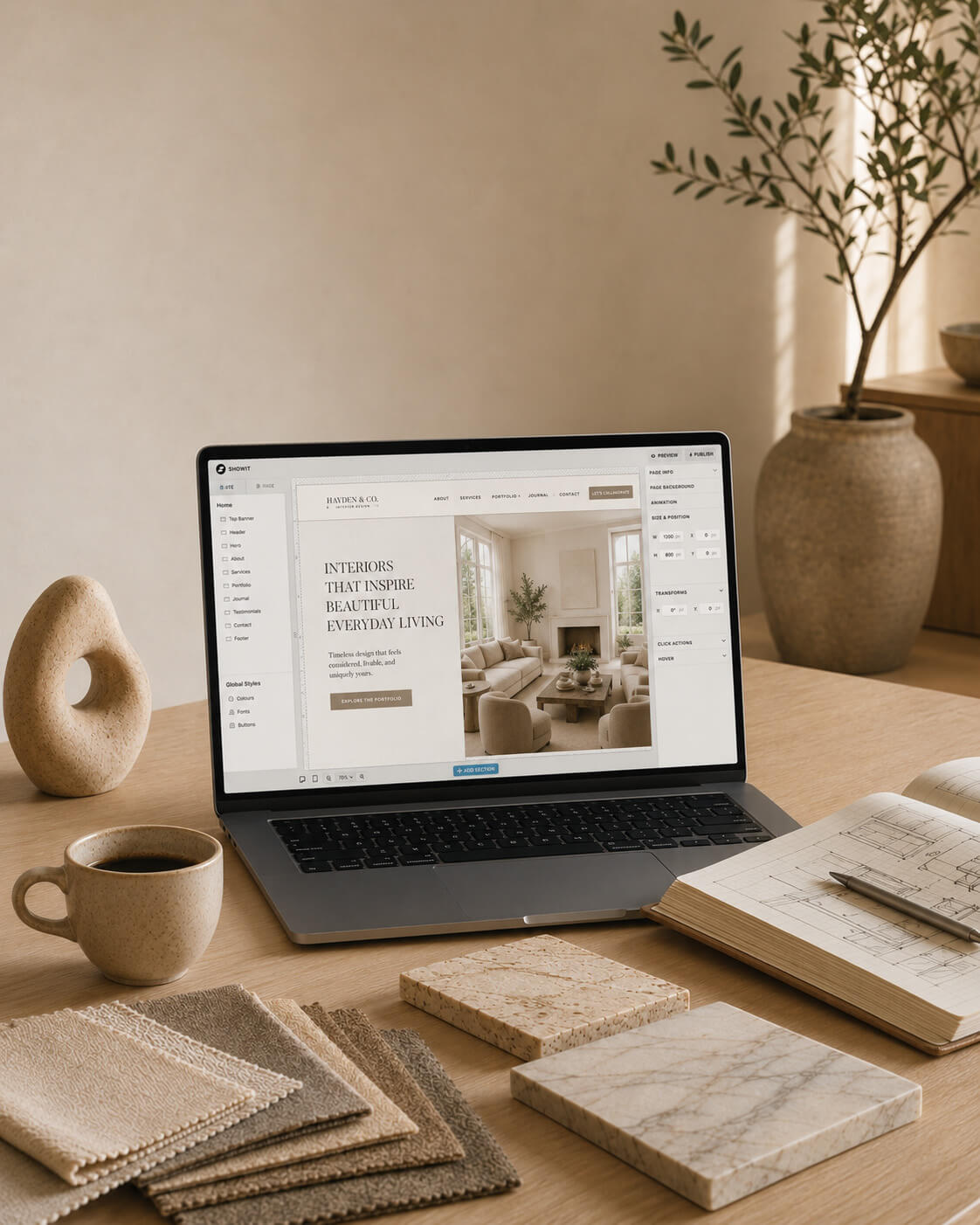
showit
the drag and drop
platform of dreams.
Showit is the RH of web design platforms. So, if you want a truly exquisite website without the six figure budget and months spent writing endless custom code, look no further.
SUBSCRIPTIONS START AT $22 USD/MONTH, BILLED YEARLY. You get A free month and so does Curator.

photography
sweet ginger
capture the Moments Your Heart will treasure.
It is our great pleasure to introduce you to Virginia. We are so deeply enamoured with her work, you can safely assume that any recent photograph of our CEO or family is a Sweet Ginger creation.
Investments vary by session type. you get a 15-minute mini session for $275 and WE get A $50 credit!

premium custom printing
Jukebox
the printer of dreams for Marketing Collateral
When you need materials to represent your brand in the analog world, trust Jukebox. Their proof system shows you exactly what your products will look like. #goodsurprisesonly
When you spend more than $50 on your order you get $25 off and we get a $25 credit.

Lead Magnets + More
BDOW!
the ultimate integrated conversion system
BDOW! gives you the best combination of features, flexibility, and pricing in the market. No coding required. Just everything you need to build high-converting experiences, connect your systems, and then launch, optimize, and grow.
send us an email to request discount info.

customer relationships
honeybook
Organize your business,
your way, all in one place.
HoneyBook is the software solution that has created the greatest freedom and ease in our business. We can focus on you because of its full suite of business management and client interaction tools.
SUBSCRIPTIONS START AT $16 USD/MONTH, BILLED YEARLY. You get 30% off your first year and we get up to $100.

Project management
Clickup
one (productivity) app
to replace them all.
What HoneyBook is to customer relationship management software, ClickUp is to project management software. We use ClickUp for lead magnet funnel strategies, and so much more.
Free plan available. I get $1.50 for free accounts and up to $20 per seat for paid accounts.

Digital workspace provider
Everything, everywhere, oraganized all at once.
Curator relies on Google Workspace to keep our business balanced with a productive and functional home life. Calendars, email, business and client files; this is how we manage our daily flow.
ask your project's lead designer for a unique promo code to get 10% off your first year.

information security
Keeper
Essential security for your everything.
We've been using Keeper to protect family passwords and streamline our home admin for YEARS. So, when I began my web design career, using Keeper for my business was the easiest choice ever.
Personal Plans begin at $2.92 USD/month. you get 30% Off and I get $30.

Financial management
quickbooks
the world's leader in business accounting
I can faithfully say that this is the most powerful accounting software I've used. While it's true that I appreciate QB's extensive features, its the numerous native integrations I treasure most.
subscriptions start at $24 CAD/month. You get 50% off your first 6 months and i get $100 CAD.

Business banking
Venn
stress-free and low-fee small business banking
We believe this is the most user-friendly and cost-effective business banking account available in Canada today. Sign up online, get instant cards, earn cashback, and don't get shocked by fees.
get an enrolment bonus of $100 when you spend more than $10,000 with your new venn card.

legal protection
WebsitePolicies
Website-Policies
simple cookie consent and privacy compliance
Cookie
& privacy compliance
The role of user activity data in a company's marketing activities is governed by complex legal frameworks. Compliance is essential, and websitepolicies makes it easy to stay on top of requirements.
The role of user activity data in a company's marketing activities is governed by complex legal frameworks. Compliance is essential, and Website-policies makes it easy to stay on track.
WebsitePolicies.com has the best pricing available. Choose the subscription that's right for you.

legal protection
contract shop
like your bff is a lawyer, but better.
like your bff is
a lawyer, but better.
It's no understatement to say that legal protection is an absolute necessity for every person or entity with an online presence. Website T&Cs, client contracts; you name it, you need it.
contract templates vary by type. You get peace of mind (priceless) and i get 20% on each sale.
The
BUSINESS


LOOKING for our INSTAGRAM?
Sorry, you're not going to find it.
Disappointed? Send us a quick note to strike up a conversation or request an in-person chat. We can't wait to meet you!

We respectfully acknowledge that our work takes place on the traditional and ancestral lands of the Treaty 7 region in Southern Alberta. This includes the Blackfoot Confederacy, comprising the Siksika, Piikani, and Kainai Nations, as well as the Tsuut’ina Nation and the Stoney Nakoda Nations of Chiniki, Bearspaw, and Goodstoney. We also recognize that Calgary is home to the Otipemisiwak Métis Government of the Métis Nation within Alberta, Region 3.
We honour the enduring relationships that Indigenous Peoples have with this land,
and we recognize that this territory has been a place of gathering, livelihood,
and cultural connection for over 10,000 years.
We acknowledge the deep and ongoing impacts of colonization, including displacement,
cultural erasure, systemic injustices, and intergenerational trauma that continue to affect
First Nations, Inuit, and Métis communities today. We recognize that
these harms are not only historical, but present and ongoing.
As a business, we are committed to listening, learning, and taking meaningful steps toward reconciliation. We strive to approach our work with respect, humility, and a responsibility to contribute, however we can, to a more equitable and inclusive future.
We honour the enduring relationships that Indigenous Peoples have with this land,
and we recognize that this territory has been a place of gathering, livelihood,
and cultural connection for over 10,000 years.
We acknowledge the deep and ongoing impacts of colonization, including displacement, cultural erasure, systemic injustices, and intergenerational trauma that continue to affect
First Nations, Inuit, and Métis communities today. We recognize that these harms are not only historical, but present and ongoing.
As a business, we are committed to listening, learning, and taking meaningful steps toward reconciliation. We strive to approach our work with respect, humility, and a responsibility to contribute, however we can, to a more equitable and inclusive future.
Home
Creative Services
Web Design
Brand Identity
Graphic Design
Copywriting
Art Direction
Media Curation
Strategy Services
Brand Strategy
Digital Strategy
About
The Archive Blog
Client Exhibitions
Join Curator
Questions & Answers
Contact Us

Showit vs. WordPress and 10 Reasons they Work Best Together

How to Create a Stand-Out Name for Your New Business
