March 27, 2026
Is Your Brand & Website Helping or Hindering Your Business?
Be honest for a moment. Is your brand and website actually working for you? Not just existing. Not just “looking nice.” Not just something you check off your to-do list because you know you’re supposed to have it. But actively attracting the right clients, building trust, and converting interest into real opportunities.
If you hesitated, even slightly, pay attention because that moment of hesitation could be the first sign that something isn’t fully aligned.
Research shows that users form an opinion about your website in as little as 0.05 seconds. Before they read a headline, click a button, or scroll through your work, they’ve already made a judgment about your credibility. And according to studies conducted by the Stanford Web Credibility Project, 75% of consumers base that credibility on your website design alone.
That means your brand and website are active assets, constantly shaping perception, influencing decisions, and either reinforcing your value… or quietly undermining it. The challenge is, most businesses don’t start with misalignment. They grow into it.
What once felt like a strong, cohesive brand may have been created at an earlier stage, before your expertise deepened, your services evolved, or your positioning became more refined. Your website may have been built quickly to establish an online presence, not to strategically convert visitors into clients. And over time, a subtle gap begins to form.
Your business evolves… but your brand and website stay the same.
This gap doesn’t always feel urgent, but it shows up in tangible ways. You might notice an increase in misaligned inquiries. Potential clients who don’t fully understand your value. Conversations that require more explanation, more justification, more effort than they should.
Instead of your brand doing the heavy lifting, you are. And that creates friction both for you and for the people you’re trying to attract.
The truth is, when your brand and website are aligned, they simplify everything. They communicate clearly, build trust quickly, and create a natural sense of momentum in your business. But when they’re not, even small disconnects can compound into missed opportunities.
This guide is designed to help you identify whether that disconnect exists, and what to do about it. Because once you have clarity, you can make intentional, strategic changes that align your brand with where your business is now, not where it used to be. And that starts with understanding what your brand and website are actually meant to do.
The Real Role of Your Brand & Website
Your brand and your website are often treated as separate pieces of your business: one is seen as visual, and the other as functional. But in reality, they are deeply interconnected, and together, they shape how your business is perceived, experienced, and ultimately chosen. After all, on a deep emotional level, we all know that a brand is more than a logo or a set of colours. Instead these components form an identity that people create relationships with.
It’s the feeling they get when they encounter your work. The assumptions they make about your level of quality, your professionalism, and your value, often before they’ve read a single word. Your website is where that perception is tested: where interest turns into action, where curiosity becomes inquiry, and where someone decides whether to trust you, engage with you, or continue their search elsewhere.
And all of this happens subconsciously.
Research shows that 94% of first impressions are design-related, meaning your visual presentation plays a critical role in how your business is judged from the outset (Behaviour & Information Technology Journal). At the same time, usability and clarity are equally important, because even a visually strong website will fail if it creates confusion or friction.
When your brand and website are aligned, they work together to do five essential things:
1. Communicate your value instantly
Within seconds, a potential client should understand what you do, who it’s for, and why it matters. If they have to think too hard, they disengage.
2. Attract the right audience
Your brand acts as a filter. It should draw in people who are aligned with your services, pricing, and process, while naturally repelling those who are not.
3. Build trust before conversation
By the time someone reaches out, your brand and website should have already established credibility. According to Stanford research, the majority of users evaluate trust based on visual design alone, reinforcing how critical this first layer of perception is.
4. Position you at the right level
Whether you are positioned as entry-level, mid-tier, or premium is determined as much by your pricing as it is communicated through your brand. If there is a disconnect, it creates hesitation.
5. Guide users toward action
A strategic website doesn’t just present information—it leads users. Through clear structure, messaging, and calls-to-action, it reduces uncertainty and makes the next step obvious.
When these elements work together, your brand and website create momentum by reducing the need to over-explain, shortening decision timelines, and increasing the quality of inquiries. And, of course, when they are misaligned, the opposite happens. You may still get traffic. You may still get interest. But without clarity and cohesion, that interest doesn’t convert.
This is why understanding their role is foundational to the success of a business. Before you can improve your brand or website, you need to understand what they are actually responsible for, and what they should be doing for you every single day. Because once you know what they should be doing, it becomes much easier to recognize when they’re falling short.
And the truth is, most gaps aren’t obvious at first. They don’t always show up as something clearly “broken.” Instead, they appear as subtle patterns or a lingering sense that something isn’t quite working the way it should.
These signals are easy to overlook, but they’re often the clearest indicators that your digital presence is no longer fully supporting your business.
The Difference Between Pretty & Strategic
It’s easy to assume that if a brand or website looks polished, it must be effective. After all, visual appeal is often the most immediate and noticeable aspect of any digital presence. A well-designed logo, a cohesive colour palette, and a beautifully structured website can create a strong first impression, and that matters.
However, while aesthetics play an important role, they are not what ultimately drives results.
A brand or website can appear elevated on the surface and still fail to communicate clearly, build trust, or convert interest into action. This is where the distinction between “pretty” and “strategic” becomes essential. A visually appealing brand may capture attention, but a strategic one backed up by a robust digital marketing strategy sustains it, and, more importantly, directs it.
Looking Beyond Visual Appeal in Branding
A “pretty” brand is often created with a focus on how things look. It may follow current design trends, feel cohesive across platforms, and present a polished image. But if it lacks clarity in its messaging or positioning, it leaves too much open to interpretation.
In these cases, potential clients may notice the brand, but not fully identify with it or understand how it can help them.
A strategic brand, by contrast, is built with intention. It considers not only visual identity, but also audience, positioning, and communication. It is designed to convey meaning quickly and consistently, ensuring that the right people recognize themselves within it.
This distinction is critical because perception directly influences trust.
As mentioned previously, users rely heavily on visual design when forming initial judgments about credibility. However, that initial trust is fragile. If the messaging, tone, overall experience, or follow-up does not align with what the visuals suggest, that trust can quickly erode.
A strategic brand ensures that there is no disconnect between what is seen and what is understood. It aligns perception with reality, creating a sense of confidence that makes decision-making easier for the client.
Moving from an Aesthetic to an Experience
A similar dynamic exists when it comes to your website. A visually appealing website may include strong imagery, modern layouts, and thoughtful design details. These elements contribute to a positive first impression, but they do not guarantee that a visitor will take action.
In many cases, websites that prioritize aesthetics without strategy leave users uncertain about what to do next. The information may be present, but it is not structured in a way that guides behaviour. A strategic website, on the other hand, is designed around how users actually engage with content.
Studies from the Nielsen Norman Group show that users tend to scan web pages rather than read them in full, often following predictable patterns. This means that clarity, hierarchy, and structure are just as important as visual design.
A strategic website anticipates this behaviour. It presents information in a logical sequence, highlights key messages, and makes the next step clear. Rather than requiring the user to search or interpret, it guides them naturally toward action.
In this way, the website becomes an active part of your business development process.
Why the Distinction Matters
When a brand or website leans too heavily on aesthetics alone, it often creates subtle but meaningful friction. Potential clients may feel uncertain about the value being offered. They may take longer to make decisions, or choose not to move forward at all. Over time, this can result in lower-quality inquiries, longer sales cycles, and missed opportunities.
These outcomes are rarely the result of poor design. More often, they stem from a lack of strategic clarity. When strategy is integrated into both brand and website, the experience becomes more cohesive and intuitive. Messaging is easier to understand, positioning feels more defined, and clients are able to move forward with greater confidence.
The goal, ultimately, is not to choose between beauty and strategy, but to ensure that they work together. A strong brand and website should be both visually compelling and intentionally structured, so that they not only attract attention, but also support meaningful action.
With this distinction in mind, the next step is to consider how your own brand and website are currently performing. Because understanding the difference between what looks effective and what functions effectively is only valuable if it can be applied.
In the following section, you will be guided through a structured self-assessment designed to help you evaluate your brand and website with greater objectivity, so you can identify where alignment already exists, and where there may be opportunities for improvement.
Your Self-Assessment
Now that you know the purpose of your brand and website is to communicate value, build trust, and support conversion, the next logical step is to evaluate how effectively they are doing that now.
This self-assessment is designed to help you do exactly that.
Rather than relying on instinct alone, it gives you a more structured way to identify strengths, uncover friction points, and determine where your digital presence may no longer be fully aligned with your business. The goal is not to achieve perfection, but clarity. In many cases, even a few small patterns can reveal why your brand or website feels slightly out of step with the level at which you are operating.
For each statement below, choose the response that feels most accurate:
- 2 points = Yes, consistently
- 1 point = Somewhat / inconsistently
- 0 points = No
You can complete this quickly, but it will be most useful if you answer honestly.
Part One: Brand Clarity & Positioning
Your brand should do more than look cohesive. It should communicate who you are, who you serve, and why your business is distinct.
Positioning
- A potential client could understand what my business does within a few seconds.
- My brand clearly communicates who my services are for.
- My messaging makes it obvious what sets my business apart from others in my industry.
- My brand reflects the level at which I want to be perceived in the market.
- My current positioning feels aligned with the clients I most want to attract.
Perception & Trust
- My visual identity feels professional, cohesive, and current.
- My brand creates a strong first impression that supports credibility.
- My tone of voice feels intentional and aligned across platforms.
- My brand feels distinctive rather than generic or interchangeable.
- I feel fully confident sharing my brand with prospective clients.
Alignment
- My brand reflects the quality of the work or service I deliver today.
- My brand supports my pricing rather than undermining it.
- My brand feels aligned with the current stage of my business, not an earlier version of it.
- My brand attracts clients who are generally a good fit.
- I rarely feel the need to over-explain my value before someone understands it.
Brand subtotal: /30
Part Two: Website Performance & User Experience
Your website should not only represent your business well; it should also make it easy for a visitor to understand your offer, build trust, and take the next step.
Clarity
- My homepage clearly explains what I do and who it is for.
- A visitor can quickly identify the core services or offers available.
- My website copy is clear, specific, and easy to understand.
- My website communicates value without relying on too much explanation.
- My website feels focused rather than vague or overly broad.
Usability
- My website is easy to navigate.
- Key information is easy to find.
- My pages are structured in a logical way.
- My site feels intuitive to use on both desktop and mobile.
- The design supports readability rather than distracting from it.
Conversion
- My calls-to-action are clear and visible.
- It is obvious what step a visitor should take next.
- My website is helping generate inquiries, bookings, or leads.
- The overall experience builds confidence and makes taking action feel easy.
- My website feels like an active business tool, not just an online brochure.
Website subtotal: /30
Part Three: Visibility, Marketing & Momentum
A strong website is important, but it cannot perform in isolation. This section helps you assess whether your website is being supported by a broader marketing strategy.
Content & Visibility
- I regularly publish content that would be useful to my ideal audience.
- My website includes content that demonstrates expertise, such as articles, insights, or case studies.
- My content supports discoverability through search and sharing.
- I have a clear set of topics or themes I return to in my marketing.
- My marketing consistently directs people back to my website.
Distribution & Consistency
- I have a consistent rhythm for sharing content through channels such as email, social media, or partnerships.
- I am intentional about how I distribute content, rather than posting sporadically.
- My brand feels cohesive across my website and other marketing channels.
- I actively create opportunities for people to encounter my business more than once.
- My website and marketing work together as part of one larger system.
Authority & Growth
- My digital presence supports long-term trust, not just short-term visibility.
- I am building authority in my industry through thought leadership, education, or strategic visibility.
- I participate in opportunities that expand awareness of my business, such as networking, speaking, or collaborations.
- My website reflects and supports my broader business development efforts.
- I feel that my digital presence is contributing to growth rather than simply existing.
Marketing subtotal: /30
Part Four: Internal Alignment Check
This final section is important because misalignment often shows up internally before it becomes obvious externally.
- My brand and website feel like a genuine reflection of the business I am building now.
- I feel proud to send potential clients to my website.
- I trust that my digital presence is helping communicate my value when I am not in the room.
- I feel that my brand and website are creating momentum rather than friction.
- If I am being honest, I believe my current digital presence is supporting my next level of growth.
Alignment subtotal: /10
Scoring Your Results
Add your totals together for a score out of 100.
85–100: Strong Alignment
Your digital presence appears to be working in your favour. Your brand and website are likely creating trust, clarity, and momentum, and your marketing efforts are reinforcing that foundation. This does not necessarily mean everything is perfect, but it does suggest that your core positioning and presentation are well aligned.
What to do next:
Focus on refinement rather than reinvention. Look for opportunities to deepen authority, improve conversion points, and strengthen consistency across your content and marketing channels.
65–84: Functional, but With Noticeable Gaps
Your foundation is likely solid in some areas, but there are points of friction that may be affecting growth. Perhaps your branding is strong but your website is underperforming. Or your website may be clear, but your broader marketing lacks consistency.
In this range, the issue is often not that your digital presence is failing; it is that it is not working as hard as it could.
What to do next:
Review your lowest-scoring section first. That is usually where the clearest opportunity lies. Rather than trying to change everything at once, focus on one priority area, such as messaging, navigation, calls-to-action, or content strategy, and strengthen it intentionally.
45–64: Misalignment Is Likely Affecting Results
At this stage, your brand, website, or marketing ecosystem is probably creating more friction than support. You may be attracting the wrong clients, struggling to convert attention into action, or feeling that your business has outgrown how it is currently being presented.
This range often indicates that your digital presence no longer reflects your actual level, value, or direction.
What to do next:
Start with diagnosis before design. Clarify your positioning, identify where messaging is unclear, and assess whether your website is structured to guide people effectively. A strategic overhaul may not require rebuilding everything, but it will likely require more than surface-level edits.
0–44: Your Digital Presence Is Almost Certainly Holding You Back
A score in this range suggests that your brand and website are not currently functioning as strategic business tools. They may still exist as assets, but they are likely not building trust, attracting the right people, or supporting conversion in a meaningful way
This can feel discouraging, but it is also useful information. Once the gap is visible, it becomes possible to address it.
What to do next:
Focus on fundamentals. Clarify who you serve, how you want to be positioned, and what your website needs to communicate first. Then evaluate whether your visual identity, messaging, structure, and marketing systems all support that direction. This is often the point at which outside strategic support becomes most valuable.
How to Interpret Your Section Scores
Your overall score is helpful, but your section totals are often even more revealing.
If your Brand score is low
You may have a positioning problem rather than a visibility problem. In other words, people may be seeing your business, but they are not clearly understanding its value, distinctiveness, or level.
Recommended focus:
Refine your messaging, clarify your audience, and assess whether your visual identity still reflects your current business.
If your Website score is low
Your brand may be creating interest, but your site is not converting that interest effectively. This often points to issues with clarity, structure, calls-to-action, or usability.
Recommended focus:
Review your homepage messaging, simplify navigation, improve page hierarchy, and ensure every page supports a clear next step.
If your Marketing score is low
Your website may be stronger than you think, but it is not being supported consistently enough to generate visibility and momentum.
Recommended focus:
Develop a realistic content strategy, create repeatable distribution channels, and ensure your website is the central hub of your marketing ecosystem.
If your Alignment score is low
This usually signals a deeper disconnect. Even if some outward elements appear polished, something internally feels off.
Recommended focus:
Pay attention to that instinct. Misalignment is often felt before it is fully articulated. This is a cue to step back and evaluate whether your digital presence still reflects the business you are actually trying to build.
Where to Go From Here
By this point, you should have a clearer sense of whether your brand, website, and marketing are fully supporting your business, or whether there are areas where misalignment is creating friction.
That awareness is valuable, but on its own, it is not enough.
The next step is knowing how to respond to what you have uncovered in a way that is thoughtful, strategic, and proportionate to the problem. This is where many businesses lose momentum. Once they recognize that something feels off, they immediately jump to visible changes: a new logo, a homepage refresh, updated colours, or a different website template. While those changes can sometimes be part of the solution, they are rarely the right place to begin in isolation.
A strong digital presence is not built through disconnected updates. It is built through alignment.
That means understanding the underlying issue before deciding how to fix it. If your self-assessment revealed low scores around clarity, your next step may not be a redesign at all. It may be a positioning and messaging issue. If your weakest area is visibility, the real opportunity may lie less in changing your website and more in developing a stronger content and marketing strategy that consistently drives the right people to it. And if your results suggest that your business has outgrown the way it is currently presented, then what is needed may be a more holistic realignment of brand, website, and strategy together.
For that reason, one of the most valuable things you can do at this stage is resist the urge to make reactive changes. Instead, begin by identifying patterns. Which section of the self-assessment scored lowest? Which individual statements pointed to the greatest friction? Are the issues primarily related to perception, communication, conversion, or visibility? Those answers will help determine where your attention should go first.
Why Professional Guidance Can Be So Valuable
In many cases, this is the point at which working with a professional becomes especially worthwhile.
When you are immersed in your own business every day, it can be difficult to evaluate your brand and website objectively. You may sense that something is not working as well as it should, but struggle to determine whether the issue is strategic positioning, messaging, user experience, visual identity, or marketing consistency. That uncertainty often leads to surface-level fixes that do not address the root cause.
Working with a professional helps create clarity before action. Instead of guessing, you are able to understand what is actually causing the friction and what kind of solution will create the greatest impact.
At Curator, this is exactly where our strategy services are designed to support businesses.
Our Brand Strategy service is focused on helping you clarify how your business should be positioned, perceived, and communicated. This includes defining what sets you apart, refining your messaging, and ensuring that your brand reflects both the quality of your work and the level at which you want to be known. When a brand is strategically grounded, it becomes easier to attract the right clients, communicate value more clearly, and build trust from the outset.
Our Digital Strategy service complements that work by focusing on how your broader online presence functions in practice. This includes evaluating how effectively your marketing strategy engages your ideal clients to encourage conversion using a combination of email marketing, content marketing, and search optimization. A website should not operate as a standalone asset. It should function as part of a larger system that supports visibility, authority, and growth.
The Four Core Priorities to Focus On Next
Whether you choose to work with a professional now or later, the most effective path forward usually begins with four key areas of focus.
1. Clarify Your Positioning
Before changing visuals or restructuring your website, it is important to be clear about who you serve, what you want to be known for, and what differentiates your business in a meaningful way. Without that clarity, even the most polished design will struggle to create the right kind of connection.
2. Refine Your Messaging
Once your positioning is clear, your language needs to reflect it. Your website and brand should communicate with greater specificity, confidence, and consistency. This is often where much of the perceived friction begins to dissolve, because clients can more quickly understand your value and why it matters.
3. Optimize the User Experience of Your Website
This includes reviewing navigation, page structure, hierarchy, calls-to-action, and the overall flow of information. A strategic website makes it easy for visitors to understand where they are, what they need to know, and what step to take next.
4. Align Your Visual Identity
Visual refinement is important, but it is most effective when it follows strategy. Once positioning, messaging, and website structure are clear, visual identity can more powerfully reinforce the level, tone, and experience you want your brand to convey.
Do Not Overlook the Marketing That Supports It All
If your self-assessment highlighted gaps in visibility and consistency, this roadmap should also extend beyond your brand and website themselves.
A strong digital presence depends on ongoing marketing support through content, search visibility, strategic distribution, partnerships, networking, and other forms of relationship-building that keep your business discoverable and relevant over time.
In other words, even a strong website cannot do all of the work on its own. It needs to be supported by a broader digital strategy that brings the right people to it, reinforces your authority, and creates repeated opportunities for engagement.
The Goal Is Alignment, Not Just Improvement
Ultimately, the goal is not simply to improve your brand or website in a general sense. It is to create greater alignment between how your business operates, how it is perceived, and how effectively it is able to grow.
That kind of alignment does not happen by accident. It is created through strategy, clarity, and intentional action. And once that foundation is in place, every part of your digital presence begins to work harder for you.
Even the Best Websites Need a Marketing Engine
A strong website is an essential part of a modern business, but it is important to be realistic about what a website can and cannot do on its own. Even a beautifully designed, strategically written website will struggle to generate meaningful results if people are not consistently being led to it. This is one of the most common misconceptions businesses have after investing in a new website: the assumption that once it is live, it will naturally begin producing a steady flow of inquiries, leads, and opportunities.
In practice, that is rarely how it works.
A website is not a complete marketing strategy in itself. It is a destination within a larger system. Its role is to receive attention, build trust, clarify your value, and make it easier for people to take the next step. But in order for that to happen, there must first be a reliable way for the right people to find it. Without that broader support, even an excellent website can remain underused, visited only occasionally, and unable to perform at the level it was designed for.
This does not mean the website lacks value. On the contrary, it means the website is most powerful when it is connected to something larger. It needs momentum behind it. It needs visibility. It needs repeated opportunities for people to encounter your business, become familiar with your expertise, and eventually arrive at your website ready to engage more seriously.
This is why it is so helpful to think of a website not as a self-sustaining tool, but as a central part of your business development ecosystem. It is where your audience comes to confirm what they have already begun to sense about your brand. It is where interest becomes trust and trust becomes action.
For that reason, a website should never be expected to do all of the work on its own. To become truly effective, it needs to be supported by a strong and consistent marketing engine.
What a Marketing Engine Actually Does
When people hear the phrase “marketing engine,” they sometimes imagine something overly complicated or overly aggressive: constant promotion, endless content, or the pressure to be visible on every platform all the time. In reality, a strong marketing engine is much more intentional than that. It is not about creating noise. It is about building a consistent system that keeps your business visible, credible, and discoverable over time.
A marketing engine creates continuity.
Rather than relying on occasional bursts of attention, referrals alone, or unpredictable word-of-mouth, it helps ensure that your business remains in motion. It creates multiple pathways through which people can encounter your work, hear your perspective, learn from your expertise, and begin to build familiarity with your brand. That familiarity matters because most people do not take action the first time they come across a business. More often, trust is built gradually through repeated exposure.
This is one of the most valuable things a marketing engine does: it creates those repeat touchpoints. Someone may first hear about your business through a referral, then come across a helpful article you have shared, then receive an email newsletter, and finally visit your website when they are ready to explore further. Each interaction builds on the one before it, making the eventual decision to inquire feel far more natural.
In this way, your website becomes stronger because it is no longer doing all of the heavy lifting by itself. Instead, it is supported by a broader system that warms up your audience before they arrive. By the time they land on your site, they are not meeting your business in isolation. They are entering an experience that already feels somewhat familiar.
That is what a marketing engine really does. It supports visibility, creates consistency, builds trust, and gives your website the context it needs to perform more effectively. It is the system that turns isolated marketing efforts into sustained momentum.
Content Is One of the Strongest Drivers
For many businesses, content is one of the most effective and sustainable ways to fuel a marketing engine. It allows you to demonstrate expertise, answer important questions, and create a body of work that continues to support your visibility long after it has been published. When done well, content does not feel like filler or forced promotion. It feels useful, relevant, and trust-building.
This is why thoughtful content can be such a valuable extension of your website.
Blog posts, articles, case studies, guides, FAQs, and insight-driven resources all help strengthen your digital presence in different ways. They give potential clients a deeper understanding of how you think, how you work, and what you know. They also create more opportunities for your website to be discovered through search, shared through other channels, and referenced in future conversations.
Just as importantly, content can help bridge the gap between awareness and readiness. Not every potential client arrives at your website prepared to inquire immediately. Some are still gathering information. Some are comparing options. Some simply need more reassurance that they are in the right place. High-value content helps move people through that process by offering clarity before a sales conversation ever begins.
It also allows your business to show up consistently even when you are not actively selling. A strong article or resource can continue attracting attention, building trust, and positioning your business effectively long after it goes live. In that sense, content becomes one of the most practical ways to make your expertise visible.
Of course, this does not mean every business needs to publish constantly. The goal is not volume for the sake of it. The goal is relevance and consistency. One strong piece of content that genuinely helps your audience is often far more valuable than a high volume of rushed or generic material.
When approached strategically, content becomes one of the clearest ways to ensure that your website is not just present, but actively supported by a growing body of authority-building work.
Distribution Matters Just As Much as Creation
Creating strong content is important, but it is only one part of the equation. Content cannot support your website effectively if it is published and then left to sit unnoticed. This is where distribution becomes essential. In many cases, the difference between content that performs well and content that goes largely unused is not the quality of the piece itself, but the consistency and thoughtfulness with which it is shared.
A marketing engine depends on this kind of strategic distribution.
Once you have a valuable article, case study, or resource on your website, it can begin working in multiple ways. It can be shared through your email newsletter, referenced in social media posts, included in client follow-ups, used in networking conversations, or incorporated into partnership opportunities. A single strong piece of content can often be extended much further than businesses initially expect, provided there is a system for making use of it.
This matters because visibility is rarely built through one isolated moment. It is built through repetition. People need opportunities to encounter your ideas more than once. They need to see your business show up consistently enough that it begins to feel familiar, credible, and relevant. Distribution is what creates those repeated touchpoints.
It also helps ensure that your website remains connected to the rest of your marketing rather than sitting apart from it. Too often, businesses treat their website as one thing and their marketing as something separate. In reality, the two should be reinforcing one another. Your website should house the substance of your expertise, while your marketing should continue guiding people back to it.
This does not require being everywhere or posting constantly. It requires having a clear understanding of where your audience is most likely to engage and how your existing content can be shared with intention. In that sense, distribution is one of the key mechanisms that allows your website and content to create sustained value over time.
Offline Visibility Still Matters
Although much of your digital presence lives online, not every important marketing touchpoint begins there. In many industries, some of the strongest opportunities for visibility and trust still come through more relational, real-world interactions. Networking events, conferences, speaking engagements, referral partnerships, community involvement, and strategic collaborations can all play an important role in how people first encounter your business.
These offline touchpoints matter because they often create the first layer of connection.
Someone may hear you speak at an event, be introduced to your business through a colleague, or come across your work through a conference or industry conversation. In that moment, they may not be ready to act immediately, but the impression begins forming. Your website then becomes the place they go to validate that first impression, learn more about your expertise, and decide whether they want to take the next step.
This is why offline visibility should be understood as part of your marketing engine rather than something separate from it. It contributes to awareness, trust, and authority in a way that digital activity alone sometimes cannot. In-person interactions often feel more relational and memorable, and when those experiences are supported by a clear, credible website, they become even more powerful.
There is also an important consistency factor here. When someone moves from hearing about you in person to visiting your website, the transition should feel seamless. The tone, positioning, and level of professionalism they encounter online should reinforce what they have already begun to understand about your business. If that alignment is present, trust deepens. If it is not, uncertainty can emerge quickly.
For that reason, your marketing engine should not be limited to content and online promotion alone. It should also account for the relationship-based opportunities that strengthen your visibility in more personal, memorable ways.
A high-performing website is not just supported by digital traffic. It is supported by the broader network of experiences through which people come to know, recognize, and trust your business.
The Bigger Picture
When all of these pieces begin to work together, it becomes much easier to see why a website needs a marketing engine behind it. A website, no matter how strong, is only one part of a much larger system. It plays a crucial role, but its effectiveness depends on the surrounding activity that supports it. Without visibility, content, distribution, and trust-building touchpoints, even the most strategic website can only do so much.
The bigger picture is this: your website is where your marketing efforts converge.
It is the place where someone who has discovered your brand elsewhere comes to understand you more fully. It is where content, referrals, networking, search visibility, and ongoing communication all begin to take clearer shape. A strong website gives those efforts somewhere meaningful to land. It receives attention and turns it into understanding, confidence, and action.
This is why the idea of a marketing engine is so valuable. It shifts the focus away from expecting your website to perform like a stand-alone solution and instead frames it as the central hub of a broader ecosystem. That ecosystem may include blog content, email marketing, social sharing, search visibility, networking opportunities, partnerships, speaking engagements, referrals, and other forms of strategic visibility. Each one contributes something slightly different, but together they create momentum.
That momentum is what most businesses are actually looking for. Not simply more traffic, but more qualified interest. Not simply a better-looking website, but a website that is actively supported by the right kind of attention. Not simply visibility for its own sake, but visibility that builds trust and leads toward meaningful opportunities.
Ultimately, the strongest digital presence is not created by brand, website, or marketing in isolation. It is created when all three are working together in a connected and intentional way. A strategic website gives people a place to arrive. A strong marketing engine gives them a reason to come back.
Presenting Our Recent Work :
Return to the Archive Blog X



BORN & RAISED IN Calgary, Alberta AND IS
our ceo & lead designer WAS
proudly
Canadian
proudly Canadian.
Lauren Killam draws creative inspiration from both her academic background and global experiences. With a foundation in applied mathematics and anthropology, she brings a thoughtful blend of analytical precision and cultural curiosity to every project. Having lived in the Middle East and California before returning to Calgary, Lauren infuses her work with a rich mix of perspectives that are grounded in strategy, guided by empathy, and always ready to challenge the status quo.
Based in Calgary, Alberta and Proudly Canadian • Web Design • Graphic Design • Marketing Strategy • Visual Branding • Copy Writing • Product Development • Email Design • Social Media Design • SEO • Image Curation • Website Auditing • Based in Calgary, Alberta and Proudly Canadian • Web Design • Graphic Design • Marketing Strategy • Visual Branding • Copy Writing • Product Development • Email Design • Social Media Design • SEO • Image Curation • Website Auditing • Based in Calgary, Alberta and Proudly Canadian • Web Design • Graphic Design • Marketing Strategy • Visual Branding • Copy Writing • Product Development • Email Design • Social Media Design • SEO • Image Curation • Website Auditing • Based in Calgary, Alberta and Proudly Canadian • Web Design • Graphic Design • Marketing Strategy • Visual Branding • Copy Writing • Product Development • Email Design • Social Media Design • SEO • Image Curation • Website Auditing • Based in Calgary, Alberta and Proudly Canadian • Web Design • Graphic Design • Marketing Strategy • Visual Branding • Copy Writing • Product Development • Email Design • Social Media Design • SEO • Image Curation • Website Auditing •
Based in Calgary, Alberta and Proudly Canadian • Web Design • Graphic Design • Marketing Strategy • Visual Branding • Copy Writing • Product Development • Email Design • Social Media Design • SEO • Image Curation • Website Auditing • Based in Calgary, Alberta and Proudly Canadian • Web Design • Graphic Design • Marketing Strategy • Visual Branding • Copy Writing • Product Development • Email Design • Social Media Design • SEO • Image Curation • Website Auditing • Based in Calgary, Alberta and Proudly Canadian • Web Design • Graphic Design • Marketing Strategy • Visual Branding • Copy Writing • Product Development • Email Design • Social Media Design • SEO • Image Curation • Website Auditing •
Based in Calgary, Alberta and Proudly Canadian • Web Design • Graphic Design • Marketing Strategy • Visual Branding • Copy Writing • Product Development • Email Design • Social Media Design • SEO • Image Curation • Website Auditing • Based in Calgary, Alberta and Proudly Canadian • Web Design • Graphic Design • Marketing Strategy • Visual Branding • Copy Writing • Product Development • Email Design • Social Media Design • SEO • Image Curation • Website Auditing • Based in Calgary, Alberta and Proudly Canadian • Web Design • Graphic Design • Marketing Strategy • Visual Branding • Copy Writing • Product Development • Email Design • Social Media Design • SEO • Image Curation • Website Auditing • Based in Calgary, Alberta and Proudly Canadian • Web Design • Graphic Design • Marketing Strategy • Visual Branding • Copy Writing • Product Development • Email Design • Social Media Design • SEO • Image Curation • Website Auditing • Based in Calgary, Alberta and Proudly Canadian • Web Design • Graphic Design • Marketing Strategy • Visual Branding • Copy Writing • Product Development • Email Design • Social Media Design • SEO • Image Curation • Website Auditing •
Based in Calgary, Alberta and Proudly Canadian • Web Design • Graphic Design • Marketing Strategy • Visual Branding • Copy Writing • Product Development • Email Design • Social Media Design • SEO • Image Curation • Website Auditing • Based in Calgary, Alberta and Proudly Canadian • Web Design • Graphic Design • Marketing Strategy • Visual Branding • Copy Writing • Product Development • Email Design • Social Media Design • SEO • Image Curation • Website Auditing • Based in Calgary, Alberta and Proudly Canadian • Web Design • Graphic Design • Marketing Strategy • Visual Branding • Copy Writing • Product Development • Email Design • Social Media Design • SEO • Image Curation • Website Auditing •


Explore Our services
BrAND
IDENTITY
Refined branding that captures the heart of your business with clarity and elegance, leaving a lasting impression with every detail.
pause

Explore Our services
Graphic Design
Purposeful design that seamlessly blends style and function, crafting interactive experiences your audience will come to trust and depend on.
pause

Explore Our services
copy- writing
Carefully crafted copy that speaks with clarity and purpose, capturing your brand voice and compelling your audience to take action.
pause

Explore Our services
art direction
Curated art direction guides visual storytelling, upholding brand compliance and business objectives across multi-disciplinary teams.
pause

Explore Our services
Media curation
Thoughtfully curated media that aligns with your brand’s identity, bringing your message to life with authenticity and visual impact.
pause

Explore Our services
marketing strategy
Integrated, thoughtful strategy that bridges design and direction, shaping a clear path to attract and convert ideal clients with purpose and precision.
pause


Explore Our services
Search & AI
Optimization
Strategic search engine and AI optimization that amplifies your online presence, boosting visibility, driving traffic, and enhancing user experience.
pause

explore The Archive
explore
The Archive
Think of our blog as your insider pass to our private catalogue. You'll find expert insights and inspired guidance on everything from web design and copywriting to marketing strategy and creative inspiration. It’s all beautifully curated to help your business grow with style.

platform comparison

hot off the press

essential article
these are a few of
Our Things
Our
Things
favourite
QUICK DISCLOSURE
Many of the sections listed below contain affiliate links for products and services that our CEO has used and loved for years. This simply means that we may receive a commission if you purchase something from this page. It won't cost you more (in fact, a lot of these programs actually include special offers that save you money) and it really helps us out. Plus, ya know, we were going to share it with you anyway!

website builder
showit
the drag and drop
platform of dreams.
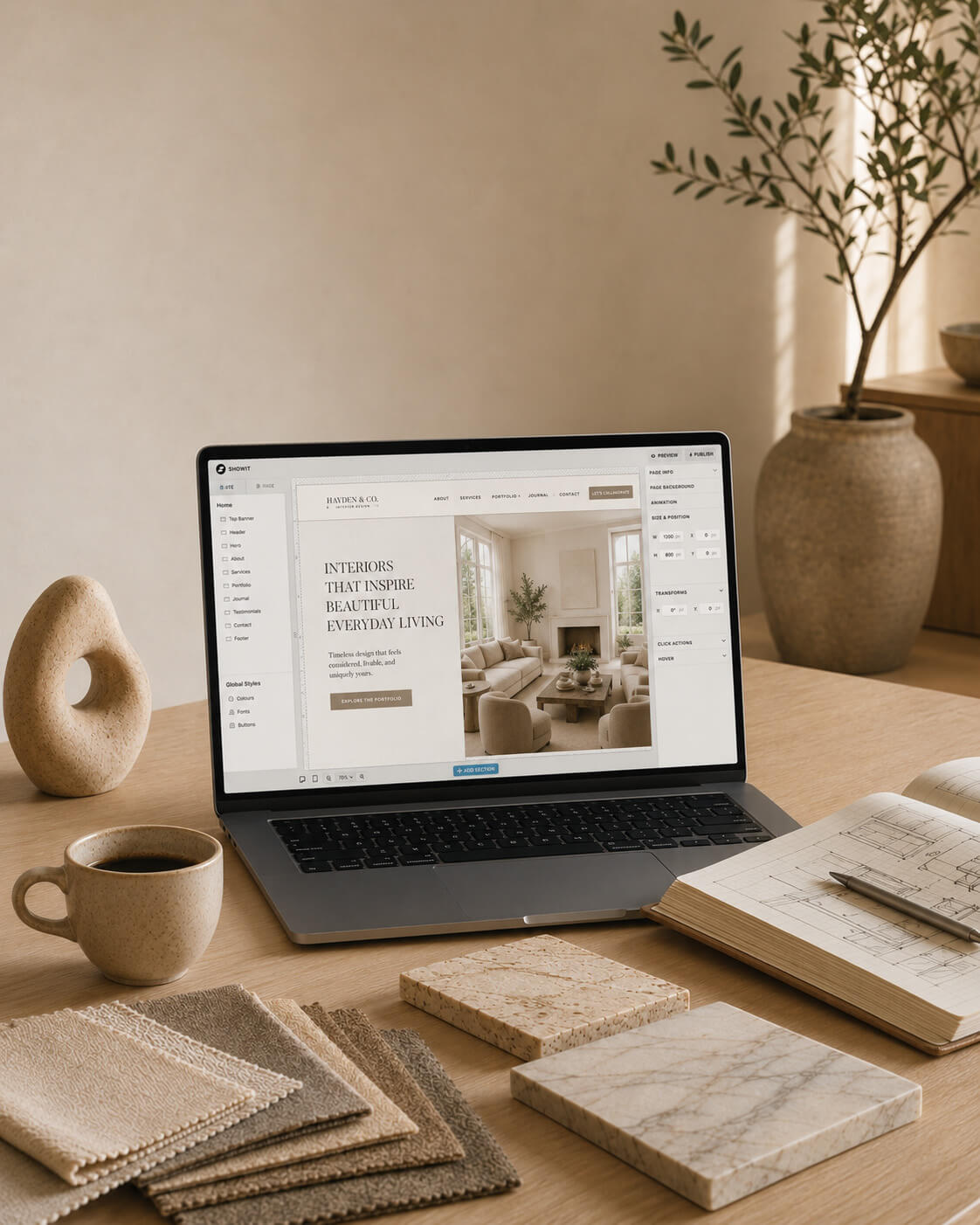
Showit is the RH of web design platforms. So, if you want a truly exquisite website without the six figure budget and months spent writing endless custom code, look no further.
SUBSCRIPTIONS START AT $22 USD/MONTH, BILLED YEARLY. You get A free month and so does Curator.

photography
sweet ginger
capture the Moments Your Heart will treasure.
It is our great pleasure to introduce you to Virginia. We are so deeply enamoured with her work, you can safely assume that any recent photograph of our CEO or family is a Sweet Ginger creation.
Investments vary by session type. you get a 15-minute mini session for $275 and WE get A $50 credit!

premium custom printing
Jukebox
the printer of dreams for Marketing Collateral
When you need materials to represent your brand in the analog world, trust Jukebox. Their proof system shows you exactly what your products will look like. #goodsurprisesonly
When you spend more than $50 on your order you get $25 off and we get a $25 credit.

Lead Magnets + More
BDOW!
the ultimate integrated conversion system
BDOW! gives you the best combination of features, flexibility, and pricing in the market. No coding required. Just everything you need to build high-converting experiences, connect your systems, and then launch, optimize, and grow.
send us an email to request discount info.

customer relationships
honeybook
Organize your business,
your way, all in one place.
HoneyBook is the software solution that has created the greatest freedom and ease in our business. We can focus on you because of its full suite of business management and client interaction tools.
SUBSCRIPTIONS START AT $16 USD/MONTH, BILLED YEARLY. You get 30% off your first year and we get up to $100.

Project management
Clickup
one (productivity) app
to replace them all.
What HoneyBook is to customer relationship management software, ClickUp is to project management software. We use ClickUp for lead magnet funnel strategies, and so much more.
Free plan available. I get $1.50 for free accounts and up to $20 per seat for paid accounts.

Digital workspace provider
Everything, everywhere, oraganized all at once.
Curator relies on Google Workspace to keep our business balanced with a productive and functional home life. Calendars, email, business and client files; this is how we manage our daily flow.
ask your project's lead designer for a unique promo code to get 10% off your first year.

information security
Keeper
Essential security for your everything.
We've been using Keeper to protect family passwords and streamline our home admin for YEARS. So, when I began my web design career, using Keeper for my business was the easiest choice ever.
Personal Plans begin at $2.92 USD/month. you get 30% Off and I get $30.

Financial management
quickbooks
the world's leader in business accounting
I can faithfully say that this is the most powerful accounting software I've used. While it's true that I appreciate QB's extensive features, its the numerous native integrations I treasure most.
subscriptions start at $24 CAD/month. You get 50% off your first 6 months and i get $100 CAD.

Business banking
Venn
stress-free and low-fee small business banking
We believe this is the most user-friendly and cost-effective business banking account available in Canada today. Sign up online, get instant cards, earn cashback, and don't get shocked by fees.
get an enrolment bonus of $100 when you spend more than $10,000 with your new venn card.

legal protection
WebsitePolicies
Website-Policies
simple cookie consent and privacy compliance
Cookie
& privacy compliance
The role of user activity data in a company's marketing activities is governed by complex legal frameworks. Compliance is essential, and websitepolicies makes it easy to stay on top of requirements.
The role of user activity data in a company's marketing activities is governed by complex legal frameworks. Compliance is essential, and Website-policies makes it easy to stay on track.
WebsitePolicies.com has the best pricing available. Choose the subscription that's right for you.

legal protection
contract shop
like your bff is a lawyer, but better.
like your bff is
a lawyer, but better.
It's no understatement to say that legal protection is an absolute necessity for every person or entity with an online presence. Website T&Cs, client contracts; you name it, you need it.
contract templates vary by type. You get peace of mind (priceless) and i get 20% on each sale.
The
BUSINESS


LOOKING for our INSTAGRAM?
Sorry, you're not going to find it.
Disappointed? Send us a quick note to strike up a conversation or request an in-person chat. We can't wait to meet you!

We respectfully acknowledge that our work takes place on the traditional and ancestral lands of the Treaty 7 region in Southern Alberta. This includes the Blackfoot Confederacy, comprising the Siksika, Piikani, and Kainai Nations, as well as the Tsuut’ina Nation and the Stoney Nakoda Nations of Chiniki, Bearspaw, and Goodstoney. We also recognize that Calgary is home to the Otipemisiwak Métis Government of the Métis Nation within Alberta, Region 3.
We honour the enduring relationships that Indigenous Peoples have with this land,
and we recognize that this territory has been a place of gathering, livelihood,
and cultural connection for over 10,000 years.
We acknowledge the deep and ongoing impacts of colonization, including displacement,
cultural erasure, systemic injustices, and intergenerational trauma that continue to affect
First Nations, Inuit, and Métis communities today. We recognize that
these harms are not only historical, but present and ongoing.
As a business, we are committed to listening, learning, and taking meaningful steps toward reconciliation. We strive to approach our work with respect, humility, and a responsibility to contribute, however we can, to a more equitable and inclusive future.
We honour the enduring relationships that Indigenous Peoples have with this land,
and we recognize that this territory has been a place of gathering, livelihood,
and cultural connection for over 10,000 years.
We acknowledge the deep and ongoing impacts of colonization, including displacement, cultural erasure, systemic injustices, and intergenerational trauma that continue to affect
First Nations, Inuit, and Métis communities today. We recognize that these harms are not only historical, but present and ongoing.
As a business, we are committed to listening, learning, and taking meaningful steps toward reconciliation. We strive to approach our work with respect, humility, and a responsibility to contribute, however we can, to a more equitable and inclusive future.
Home
Creative Services
Web Design
Brand Identity
Graphic Design
Copywriting
Art Direction
Media Curation
Strategy Services
Brand Strategy
Digital Strategy
About
The Archive Blog
Client Exhibitions
Join Curator
Questions & Answers
Contact Us

Showit vs. WordPress and 10 Reasons they Work Best Together

How to Create a Stand-Out Name for Your New Business
