
December 5, 2025
Banish Creative Blocks with These 10 Steps to Find Flow
Creative work rarely moves in a perfectly smooth line. We’ve all experienced seasons when ideas arrive effortlessly, when projects unfold with clarity, and when the work seems to carry its own momentum forward. And then there are quieter stretches; moments when inspiration feels elusive, progress slows, and even familiar tasks begin to feel surprisingly heavy. These periods are often described as creative blocks, and nearly everyone who works in design, writing, strategy, or any form of creative thinking encounters them from time to time.
It can be tempting to view a creative block as a sign that something has gone wrong. In reality, it is usually the opposite. Blocks often appear when the mind has been working intensely for a long period, when expectations have grown too rigid, or a deep facet of your intuition has identified a critical problem with your current approach.
The good news is that creative flow can be encouraged again, not by forcing ideas to appear, but by creating the right conditions for them to return.
Flow tends to emerge when the mind is rested, stimulated, curious, and free from unnecessary pressure. It thrives when we move between periods of focus and renewal, when we expose ourselves to new environments, and when we allow creativity to unfold with a little more patience.
Below are ten thoughtful ways to move through a creative block and gradually rediscover your creative rhythm.
1. Step Away and Allow the Mind to Reset
One of the most counterintuitive aspects of creative work is that progress sometimes begins by stepping away from it. When we remain fixed on a difficult problem for too long, the mind can become rigid. The same ideas circle repeatedly without producing a new perspective. At that point, pushing harder often creates more frustration than progress.
A brief pause can be remarkably effective.
Walking outside, making tea, reading something unrelated, pursuing an unrelated creative endeavor just for fun, or shifting attention to a different task allows the mind to relax its grip on the problem. During this period, the subconscious continues processing quietly in the background.
Many people experience this phenomenon: an idea arrives unexpectedly during a walk, in the shower, or while doing something entirely unrelated to the original project. These small resets create the mental space that creative flow requires.
Rather than viewing a pause as lost productivity, it can be more helpful to see it as a strategic part of the creative process.
2. Release the Pressure of Perfection
Perfectionism is one of the most common causes of creative blocks. When every idea is expected to be exceptional from the outset, the mind becomes cautious. Instead of exploring freely, it begins filtering and judging ideas before they have a chance to develop.
Creativity thrives in an environment where experimentation and mistakes are allowed.
One of the simplest ways to reduce creative resistance is to deliberately lower the bar during early stages of a project. Sketch imperfect ideas. Write rough drafts. Generate multiple variations without worrying about refinement. The goal at this stage is to prioritize movement over mastery to generate a feeling of lighthearted playfulness.
Often, the ideas that initially feel incomplete or imperfect contain the seeds of something much stronger once they are developed further. Letting go of perfection temporarily creates room for creative exploration, and exploration is often what ultimately leads back to flow.
3. Change Your Environment
Creative thinking is deeply influenced by environment. Working in the same setting for long stretches can quietly limit perspective. Surroundings become familiar to the point that they no longer stimulate curiosity or new ways of thinking. A change of environment can gently refresh the mind.
Sometimes this means relocating your work for the afternoon, perhaps to a quiet café, a library, an art gallery, a museum, a park, or a park. Other times it may involve rearranging your desk, opening windows, or introducing music that shifts the atmosphere. Even small changes can alter the mental rhythm of a workday.
By placing yourself in a slightly different context, you invite the brain to notice new patterns, which can often help unlock creative momentum.
4. Seek Inspiration Through Art and Culture
Creative ideas rarely emerge in isolation, as inspiration is shaped by everything we observe, read, hear, and experience. Visiting an art gallery, listening to music or a great podcast, watching a thoughtfully crafted film, or reading an insightful book can provide surprising creative stimulation.
Exposure to art and culture expands the range of visual and conceptual references available to the mind.
A colour palette in a painting might inspire a design direction. A piece of music may suggest a mood or emotional tone for a project. Even architecture or fashion can spark unexpected ideas about composition, structure, or storytelling. The key is approaching these experiences with curiosity rather than pressure. Instead of searching for direction solutions, simply allow your creative senses to reawaken.
Over time, these influences accumulate and begin to inform your own work in subtle but meaningful ways.
5. Spend Time in Nature
Nature has an extraordinary ability to restore creative energy. Research in cognitive psychology has shown that natural environments help reduce mental fatigue and restore attentional capacity. Even brief exposure to green spaces can lower stress and improve clarity of thought. For creative professionals, this restoration can be especially valuable.
A walk along a forest trail, a quiet moment near water, or simply time spent in a park can provide a sense of spaciousness that busy environments rarely allow.
Nature also offers endless examples of visual harmony, such as patterns, colours, textures, and rhythms that designers and artists have drawn from for thousands of years.
Spending time outdoors does not need to be elaborate. A short walk during the workday can often shift mental perspective dramatically and creativity often returns when the mind is given room to breathe.
6. Travel and Experience New Perspectives
Travel can be one of the most powerful antidotes to creative stagnation. Encountering new cities, landscapes, languages, and cultural rhythms introduces unfamiliar patterns that naturally stimulate curiosity. The mind becomes more observant, noticing details that routine environments may no longer reveal. This heightened awareness often feeds directly into creative thinking.
Architecture, signage, street markets, local craftsmanship, and cultural traditions can all spark new ideas about colour, structure, storytelling, or brand experience. Even the pace of life in another place may influence how one approaches work and creativity.
Importantly, travel does not need to be grand or distant to be effective.
A day trip to a nearby town, exploring a neighbourhood you have never visited, or attending a local cultural event can produce a similar effect. The key is placing yourself in an environment that invites fresh observation, as travel interrupts routine in the best possible way.
It reminds us that there are countless ways to see the world, and that expanded perspective often reawakens creative flow.
7. Reduce Stress to Restore Mental Clarity
Creative thinking requires a certain degree of mental spaciousness. When stress levels rise too high, the brain shifts toward problem-solving and risk avoidance rather than exploration. In this state, generating imaginative ideas becomes much more difficult. Managing stress is therefore not separate from creativity; it is part of supporting it.
Simple practices can make a meaningful difference. Gentle exercise, mindful breathing, or stepping away from screens for short intervals can help reset the nervous system. Structuring the workday with intentional breaks also prevents creative fatigue from accumulating.
Sometimes the most effective solution is simply acknowledging that a project may require more time than initially expected. Whatever the method, reducing pressure often allows ideas to emerge more naturally. When the mind feels calmer and less constrained, creative thinking begins to flow again with surprising ease.
8. Ensure Adequate Rest
Rest is one of the most underestimated elements of the creative process. During sleep, the brain consolidates information, processes experiences, and forms new connections between ideas. These connections often appear as insights the following day. When rest is insufficient, the mind struggles to maintain focus and flexibility, which are two qualities that are essential for creative work.
Prioritizing adequate sleep, stepping away from demanding tasks in the evening, and allowing occasional days of true rest can have a profound effect on creative capacity. Many people find that ideas they struggled with late at night become remarkably clear after a good night’s sleep.
Creativity, like any other form of thinking, depends on a well-rested mind.
9. Celebrate Small Creative Wins
When working through a creative block, it is easy to focus exclusively on what is not yet working. However, noticing and celebrating small moments of progress can shift the emotional tone of the process.
Perhaps a single paragraph came together nicely. A layout suddenly began to feel balanced. A concept that felt uncertain yesterday now seems promising.
Acknowledging these small victories reinforces confidence and reminds the mind that forward movement is happening. Over time, these moments accumulate and gradually rebuild creative momentum.
It is critical to recognize that creativity often returns through many small steps taken with patience instead of dramatic breakthroughs.
10. Harness Momentum and Occasionally Downshift
One of the most rewarding aspects of creative work is the moment when flow finally returns. Ideas begin to connect. Tasks that once felt difficult move forward with surprising ease. This is often the moment to lean into the momentum and allow yourself to work a little longer or explore an idea more deeply.
Creative flow can be a powerful force when it appears.
It is equally important to recognize when to downshift, especially following an intense period of flow. Periods of extreme productivity are often followed by a natural need for recovery. Continuing to push indefinitely can lead back to exhaustion and another block. Therefore, balancing momentum with intentional pauses ensures that creativity remains sustainable over the long term. In practice, this rhythm often looks like cycles of focused work followed by deliberate rest or reflection.
When we learn to respect this natural cadence, creative flow becomes easier to maintain.
Creativity Thrives in the Right Conditions
Creative blocks are not a failure of imagination. More often, they are a signal that the mind needs something different: rest, inspiration, perspective, or simply a release from pressure.
By stepping away from perfection, seeking inspiration through art, travel, culture, and nature, and supporting the mind with rest and balance, it becomes much easier to rediscover creative flow.
The process is rarely immediate, but it is remarkably reliable.
Creativity tends to return when we create the conditions that allow curiosity, playfulness, and exploration to flourish again. And when that flow reappears, the work once again begins to move forward, sometimes with even greater depth and insight than before.
Presenting Our Recent Work :
Return to the Archive Blog X



BORN & RAISED IN Calgary, Alberta AND IS
our ceo & lead designer WAS
proudly
Canadian
proudly Canadian.
Lauren Killam draws creative inspiration from both her academic background and global experiences. With a foundation in applied mathematics and anthropology, she brings a thoughtful blend of analytical precision and cultural curiosity to every project. Having lived in the Middle East and California before returning to Calgary, Lauren infuses her work with a rich mix of perspectives that are grounded in strategy, guided by empathy, and always ready to challenge the status quo.
Based in Calgary, Alberta and Proudly Canadian • Web Design • Graphic Design • Marketing Strategy • Visual Branding • Copy Writing • Product Development • Email Design • Social Media Design • SEO • Image Curation • Website Auditing • Based in Calgary, Alberta and Proudly Canadian • Web Design • Graphic Design • Marketing Strategy • Visual Branding • Copy Writing • Product Development • Email Design • Social Media Design • SEO • Image Curation • Website Auditing • Based in Calgary, Alberta and Proudly Canadian • Web Design • Graphic Design • Marketing Strategy • Visual Branding • Copy Writing • Product Development • Email Design • Social Media Design • SEO • Image Curation • Website Auditing • Based in Calgary, Alberta and Proudly Canadian • Web Design • Graphic Design • Marketing Strategy • Visual Branding • Copy Writing • Product Development • Email Design • Social Media Design • SEO • Image Curation • Website Auditing • Based in Calgary, Alberta and Proudly Canadian • Web Design • Graphic Design • Marketing Strategy • Visual Branding • Copy Writing • Product Development • Email Design • Social Media Design • SEO • Image Curation • Website Auditing •
Based in Calgary, Alberta and Proudly Canadian • Web Design • Graphic Design • Marketing Strategy • Visual Branding • Copy Writing • Product Development • Email Design • Social Media Design • SEO • Image Curation • Website Auditing • Based in Calgary, Alberta and Proudly Canadian • Web Design • Graphic Design • Marketing Strategy • Visual Branding • Copy Writing • Product Development • Email Design • Social Media Design • SEO • Image Curation • Website Auditing • Based in Calgary, Alberta and Proudly Canadian • Web Design • Graphic Design • Marketing Strategy • Visual Branding • Copy Writing • Product Development • Email Design • Social Media Design • SEO • Image Curation • Website Auditing •
Based in Calgary, Alberta and Proudly Canadian • Web Design • Graphic Design • Marketing Strategy • Visual Branding • Copy Writing • Product Development • Email Design • Social Media Design • SEO • Image Curation • Website Auditing • Based in Calgary, Alberta and Proudly Canadian • Web Design • Graphic Design • Marketing Strategy • Visual Branding • Copy Writing • Product Development • Email Design • Social Media Design • SEO • Image Curation • Website Auditing • Based in Calgary, Alberta and Proudly Canadian • Web Design • Graphic Design • Marketing Strategy • Visual Branding • Copy Writing • Product Development • Email Design • Social Media Design • SEO • Image Curation • Website Auditing • Based in Calgary, Alberta and Proudly Canadian • Web Design • Graphic Design • Marketing Strategy • Visual Branding • Copy Writing • Product Development • Email Design • Social Media Design • SEO • Image Curation • Website Auditing • Based in Calgary, Alberta and Proudly Canadian • Web Design • Graphic Design • Marketing Strategy • Visual Branding • Copy Writing • Product Development • Email Design • Social Media Design • SEO • Image Curation • Website Auditing •
Based in Calgary, Alberta and Proudly Canadian • Web Design • Graphic Design • Marketing Strategy • Visual Branding • Copy Writing • Product Development • Email Design • Social Media Design • SEO • Image Curation • Website Auditing • Based in Calgary, Alberta and Proudly Canadian • Web Design • Graphic Design • Marketing Strategy • Visual Branding • Copy Writing • Product Development • Email Design • Social Media Design • SEO • Image Curation • Website Auditing • Based in Calgary, Alberta and Proudly Canadian • Web Design • Graphic Design • Marketing Strategy • Visual Branding • Copy Writing • Product Development • Email Design • Social Media Design • SEO • Image Curation • Website Auditing •


Explore Our services
BrAND
IDENTITY
Refined branding that captures the heart of your business with clarity and elegance, leaving a lasting impression with every detail.
pause

Explore Our services
Graphic Design
Purposeful design that seamlessly blends style and function, crafting interactive experiences your audience will come to trust and depend on.
pause

Explore Our services
copy- writing
Carefully crafted copy that speaks with clarity and purpose, capturing your brand voice and compelling your audience to take action.
pause

Explore Our services
art direction
Curated art direction guides visual storytelling, upholding brand compliance and business objectives across multi-disciplinary teams.
pause

Explore Our services
Media curation
Thoughtfully curated media that aligns with your brand’s identity, bringing your message to life with authenticity and visual impact.
pause

Explore Our services
marketing strategy
Integrated, thoughtful strategy that bridges design and direction, shaping a clear path to attract and convert ideal clients with purpose and precision.
pause


Explore Our services
Search & AI
Optimization
Strategic search engine and AI optimization that amplifies your online presence, boosting visibility, driving traffic, and enhancing user experience.
pause

explore The Archive
explore
The Archive
Think of our blog as your insider pass to our private catalogue. You'll find expert insights and inspired guidance on everything from web design and copywriting to marketing strategy and creative inspiration. It’s all beautifully curated to help your business grow with style.

platform comparison

hot off the press

essential article
these are a few of
Our Things
Our
Things
favourite
QUICK DISCLOSURE
Many of the sections listed below contain affiliate links for products and services that our CEO has used and loved for years. This simply means that we may receive a commission if you purchase something from this page. It won't cost you more (in fact, a lot of these programs actually include special offers that save you money) and it really helps us out. Plus, ya know, we were going to share it with you anyway!

website builder
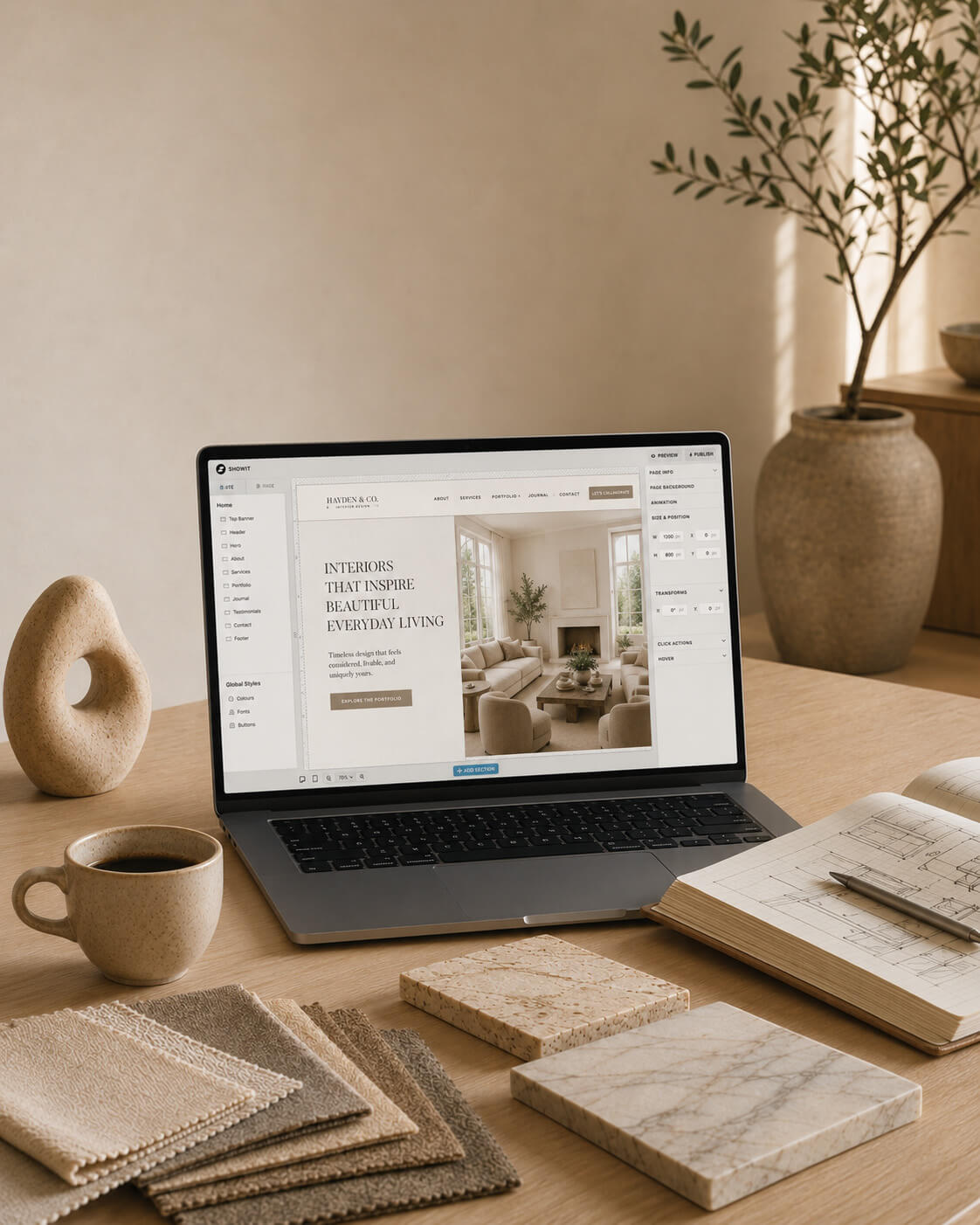
showit
the drag and drop
platform of dreams.
Showit is the RH of web design platforms. So, if you want a truly exquisite website without the six figure budget and months spent writing endless custom code, look no further.
SUBSCRIPTIONS START AT $22 USD/MONTH, BILLED YEARLY. You get A free month and so does Curator.

photography
sweet ginger
capture the Moments Your Heart will treasure.
It is our great pleasure to introduce you to Virginia. We are so deeply enamoured with her work, you can safely assume that any recent photograph of our CEO or family is a Sweet Ginger creation.
Investments vary by session type. you get a 15-minute mini session for $275 and WE get A $50 credit!

premium custom printing
Jukebox
the printer of dreams for Marketing Collateral
When you need materials to represent your brand in the analog world, trust Jukebox. Their proof system shows you exactly what your products will look like. #goodsurprisesonly
When you spend more than $50 on your order you get $25 off and we get a $25 credit.

Lead Magnets + More
BDOW!
the ultimate integrated conversion system
BDOW! gives you the best combination of features, flexibility, and pricing in the market. No coding required. Just everything you need to build high-converting experiences, connect your systems, and then launch, optimize, and grow.
send us an email to request discount info.

customer relationships
honeybook
Organize your business,
your way, all in one place.
HoneyBook is the software solution that has created the greatest freedom and ease in our business. We can focus on you because of its full suite of business management and client interaction tools.
SUBSCRIPTIONS START AT $16 USD/MONTH, BILLED YEARLY. You get 30% off your first year and we get up to $100.

Project management
Clickup
one (productivity) app
to replace them all.
What HoneyBook is to customer relationship management software, ClickUp is to project management software. We use ClickUp for lead magnet funnel strategies, and so much more.
Free plan available. I get $1.50 for free accounts and up to $20 per seat for paid accounts.

Digital workspace provider
Everything, everywhere, oraganized all at once.
Curator relies on Google Workspace to keep our business balanced with a productive and functional home life. Calendars, email, business and client files; this is how we manage our daily flow.
ask your project's lead designer for a unique promo code to get 10% off your first year.

information security
Keeper
Essential security for your everything.
We've been using Keeper to protect family passwords and streamline our home admin for YEARS. So, when I began my web design career, using Keeper for my business was the easiest choice ever.
Personal Plans begin at $2.92 USD/month. you get 30% Off and I get $30.

Financial management
quickbooks
the world's leader in business accounting
I can faithfully say that this is the most powerful accounting software I've used. While it's true that I appreciate QB's extensive features, its the numerous native integrations I treasure most.
subscriptions start at $24 CAD/month. You get 50% off your first 6 months and i get $100 CAD.

Business banking
Venn
stress-free and low-fee small business banking
We believe this is the most user-friendly and cost-effective business banking account available in Canada today. Sign up online, get instant cards, earn cashback, and don't get shocked by fees.
get an enrolment bonus of $100 when you spend more than $10,000 with your new venn card.

legal protection
WebsitePolicies
Website-Policies
simple cookie consent and privacy compliance
Cookie
& privacy compliance
The role of user activity data in a company's marketing activities is governed by complex legal frameworks. Compliance is essential, and websitepolicies makes it easy to stay on top of requirements.
The role of user activity data in a company's marketing activities is governed by complex legal frameworks. Compliance is essential, and Website-policies makes it easy to stay on track.
WebsitePolicies.com has the best pricing available. Choose the subscription that's right for you.

legal protection
contract shop
like your bff is a lawyer, but better.
like your bff is
a lawyer, but better.
It's no understatement to say that legal protection is an absolute necessity for every person or entity with an online presence. Website T&Cs, client contracts; you name it, you need it.
contract templates vary by type. You get peace of mind (priceless) and i get 20% on each sale.
The
BUSINESS


LOOKING for our INSTAGRAM?
Sorry, you're not going to find it.
Disappointed? Send us a quick note to strike up a conversation or request an in-person chat. We can't wait to meet you!

We respectfully acknowledge that our work takes place on the traditional and ancestral lands of the Treaty 7 region in Southern Alberta. This includes the Blackfoot Confederacy, comprising the Siksika, Piikani, and Kainai Nations, as well as the Tsuut’ina Nation and the Stoney Nakoda Nations of Chiniki, Bearspaw, and Goodstoney. We also recognize that Calgary is home to the Otipemisiwak Métis Government of the Métis Nation within Alberta, Region 3.
We honour the enduring relationships that Indigenous Peoples have with this land,
and we recognize that this territory has been a place of gathering, livelihood,
and cultural connection for over 10,000 years.
We acknowledge the deep and ongoing impacts of colonization, including displacement,
cultural erasure, systemic injustices, and intergenerational trauma that continue to affect
First Nations, Inuit, and Métis communities today. We recognize that
these harms are not only historical, but present and ongoing.
As a business, we are committed to listening, learning, and taking meaningful steps toward reconciliation. We strive to approach our work with respect, humility, and a responsibility to contribute, however we can, to a more equitable and inclusive future.
We honour the enduring relationships that Indigenous Peoples have with this land,
and we recognize that this territory has been a place of gathering, livelihood,
and cultural connection for over 10,000 years.
We acknowledge the deep and ongoing impacts of colonization, including displacement, cultural erasure, systemic injustices, and intergenerational trauma that continue to affect
First Nations, Inuit, and Métis communities today. We recognize that these harms are not only historical, but present and ongoing.
As a business, we are committed to listening, learning, and taking meaningful steps toward reconciliation. We strive to approach our work with respect, humility, and a responsibility to contribute, however we can, to a more equitable and inclusive future.
Home
Creative Services
Web Design
Brand Identity
Graphic Design
Copywriting
Art Direction
Media Curation
Strategy Services
Brand Strategy
Digital Strategy
About
The Archive Blog
Client Exhibitions
Join Curator
Questions & Answers
Contact Us

Showit vs. WordPress and 10 Reasons they Work Best Together

How to Create a Stand-Out Name for Your New Business
